Thank you for hosting us. Thank you for all of your kindness and patience. Thank you for the laughs and smiles. Thank you for all the information you gave freely, especially when you had to give it twice or wait for the google translate to help us understand.
Thank you for sharing your beautiful town with us. Thank you for the work you put into your town. Thank you for the murals and statues. Thank you for the clean park and the kind workers who maintain it.
Thank you for the love you have for the world we live in. Thank you for improving your town and maintaining it’s existing beauty. Thank you for the extensions of the small town out into the cloud forest. The nature preserves and tourist attractions show how much you love the small part of the world in which you live.
Thank you to the kind pharmacy for the medications, foot powder, ibuprofen, aloe wipes, antacid, and patience as we fumbled through describing our needs.
Thank you to the street vendors for tying our bracelets, and getting down items for us to try on. Thank you for answering our questions about your crafts; stones in the jewelry, fabric in the blankets and sweaters, how you make your items. Thank you for telling us about yourselves. And thank you for asking about us. Thank you for your patience in translation.
Thank you to all the restaurants. We were always served with kindness and patience. Every question we had was answered, even when we both had our phones out to translate the back and forth. We were up for trying anything and everything, and you delivered time and again. I’m not sure I could count how many new things I tried on account of your willingness to stand by my table while I looked up words on the menus that I did not know.
And thank you for the delicious food. We ate our way through Mindo on the streets, in the cafes, in the mom and pop shops, all the way to the nicest restaurants in town. We dined in a group of two, all the way to a group of 20. We never once had a rude server.
Thank you to all the mini-markets, bakeries, and coffee shops. Every store was clean and we maintained. As we browsed about, looking a new and different things, if we saw a worker and asked a question, we were always answered with ease and kindness. We must have been to almost every mini-market they have in Mindo. Some days we were after lunch for the day. Other times we were just browsing to see how they package food, or look at different things. We dottled
One of my favorite things about traveling is getting in below the surface level and experiencing the culture. For this reason, it has been amazing to know not only my beloved profe, but her entire family here in Ecuador.
I have experienced not only the Ecuadorian culture, but also the tourist culture, and the retired gringo culture. They are, of course, meshed within each other, but I have gotten a distinct experience of all three.
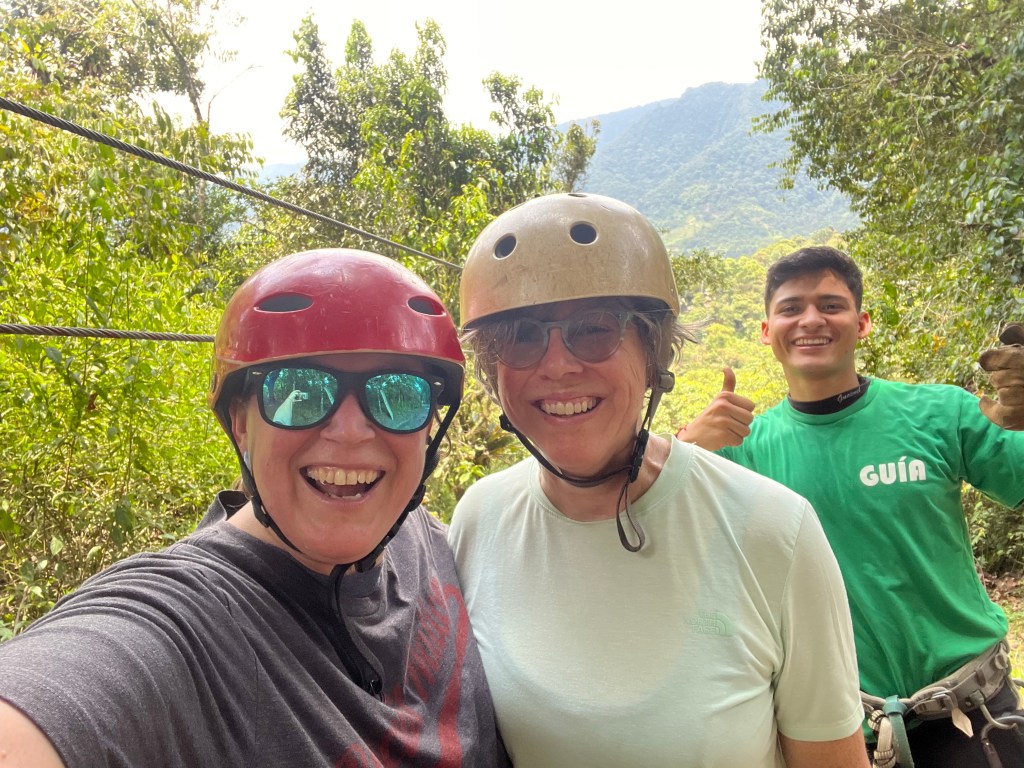
When my beloved and I are alone, especially when we are zip lining or wandering through the rain forest with a tour guide, we have gotten to experience how Ecuador, or Mindo specifically, treats it’s tourist. The people are so kind. They are light hearted and knowledgeable. I’m not sure if we have asked a single question that has gone unanswered. Many speak English, but if not, they are super patient with our Spanish. The prices are set; the currency is the American Dollar, and we have not been overcharged or had to “haggle” for anything.
We have also experienced retired gringo life, some first hand, and some in stories from the over a dozen friends of Keri and Paul that we have met. Keri told us that the vendors here will raise prices for building materials and services for things like wood or working on their house. They told us that if their Ecuadorian daughter goes in first to set a price on something like building materials for their house, they are grated a better price than if they were to go in on their own.
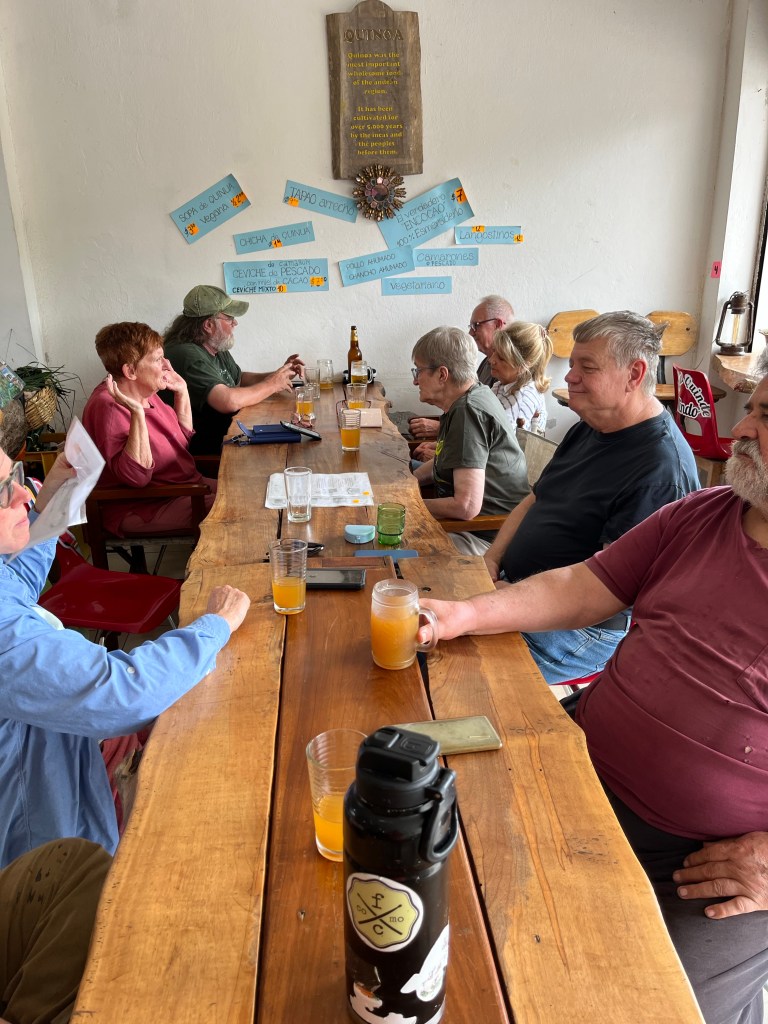
From left to right: Kansas, Canada, Paul, Missouri/Kansas, England (2), Missouri (2), and I think Michigan. Jose, the gentleman on the right is Ecuadorian by birth but lived many years in the US, and then returned to Ecuador. He is the owner of the establishment that we had our coffee tour. He built that business from the ground up and then retired, leaving his daughter in charge.
White people are assumed to have more money than Ecuadorians. To a certain extent, this is true. The Ecuadorian minimum wage is $4.25/hr, so if you are traveling, depending on your budget of course, your money will go farther here, as a general rule. Most touristy things are not overpriced. We have spent $10-$20 per activity on touristy things: zip lining, night walks, coffee tour, etc.
Also, depending on how much you retired with, of course there could be a reserve that would go farther here than in the US. But once you move here and become part of the permanent community, it is my humble opinion that you should be granted the same prices as the Ecuadorians. You are living here, you are building and maintaining your home here. You are contributing to Ecuadorian work in many forms.
We have been invited to several of the retired gringo lunches and activities. They definitely live a different life than the average Ecuadorian. They are the owners of several of the establishments, hotels, restaurants, even some of the tourist attractions. We have been to some of the nicest restaurants in town on account of the retired gringos. If you are white, no matter where you retired from, you are considered a gringo. It’s possible that this is a self-named title. I am not certain.
One particular gentleman that we met is Eric, here living and making his living because of “all things creepy and crawly” according to his website and tourist attractions. He is a guide and has built a business on the reptiles, amphibians, and arachnids that many of whom, only existing in the climate and location on the earth. The biodiversity here is second to none. We took his night walk tour and it was fascinating. His employees are bilingual and very knowledgeable about many many things in the rainforest. The tours are on his own land up in the mountains near Mindo where he also lives. It was beautiful. He is a conservationist, a scientist, and an Ecuadorian, but he is also a gringo. I personally felt super grateful to have met him. He is a super nice guy who is fascinated with anything that moves in Ecuador.
Terrible picture of Eric on the right, who is originally from Canada. Many other cultures were represented at this dinner as well.
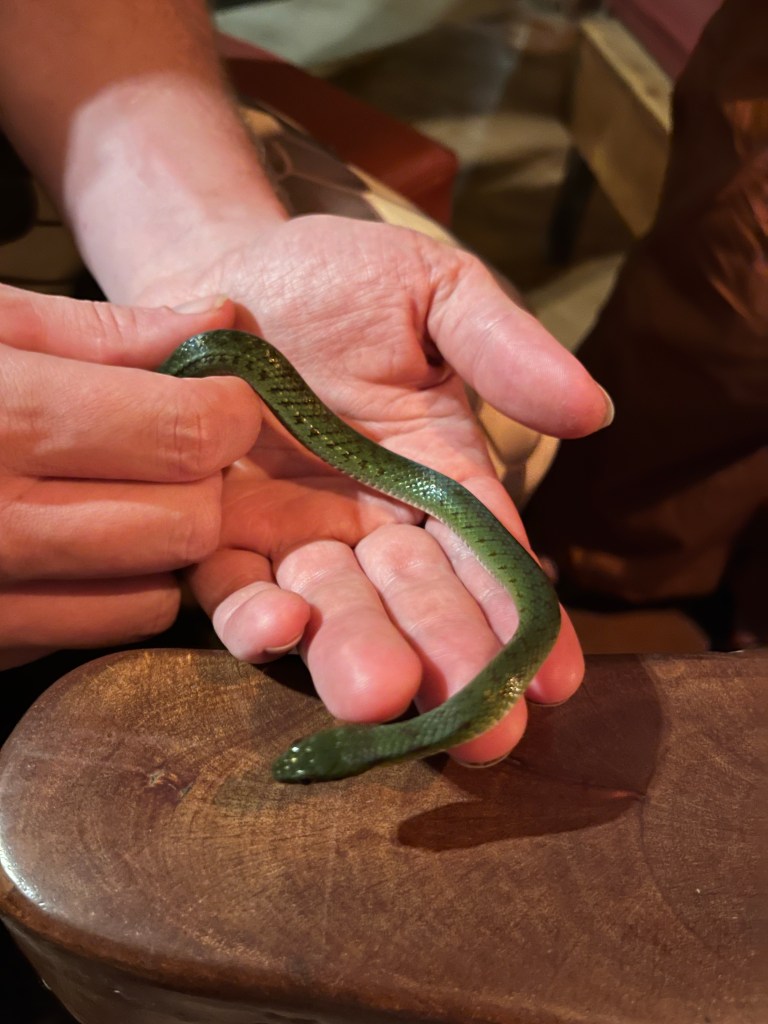
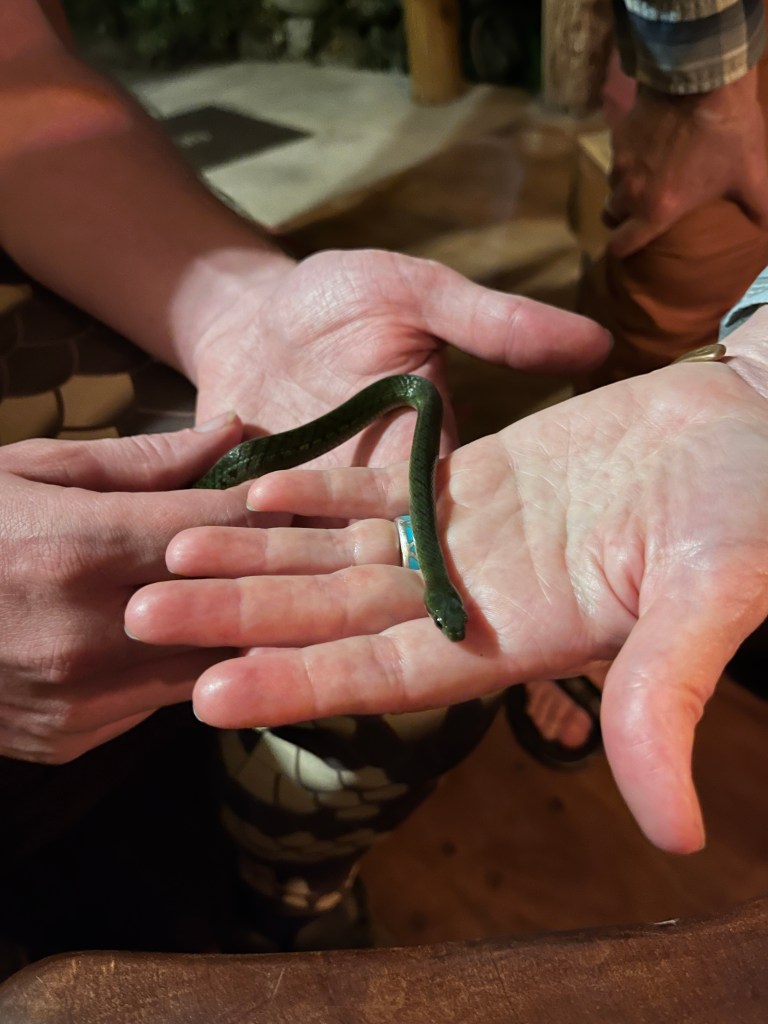
The night we met him, we had been invited to a fondue party at another expat’s house and restaurant, Di Di, the Frenchman. Eric had a snake in his bag that we all got to hold and play with. He had found it on his way. Angela asked him how many snakes he owned and he quietly shrugged and said, “It’s hard to say, because I picked this one up on the way here.”
Because Keri is such an a awesome tour guide herself, we have learned about many of the typical Mindo experiences, road construction, customs, and gossip. My reference point has been good ole Ellsworth, Kansas. Mindo is about the same size as Ellsworth. This has helped me exponentially. There are many things that they have to “go to the city” to get. There are no big grocery stores here. No Home Depot. No Cosco. Quito is the nearest city and it is two and a half hours by car. I’m sure further by bus, but there are busses that go there. One could exist here without a car, but a car is handy.
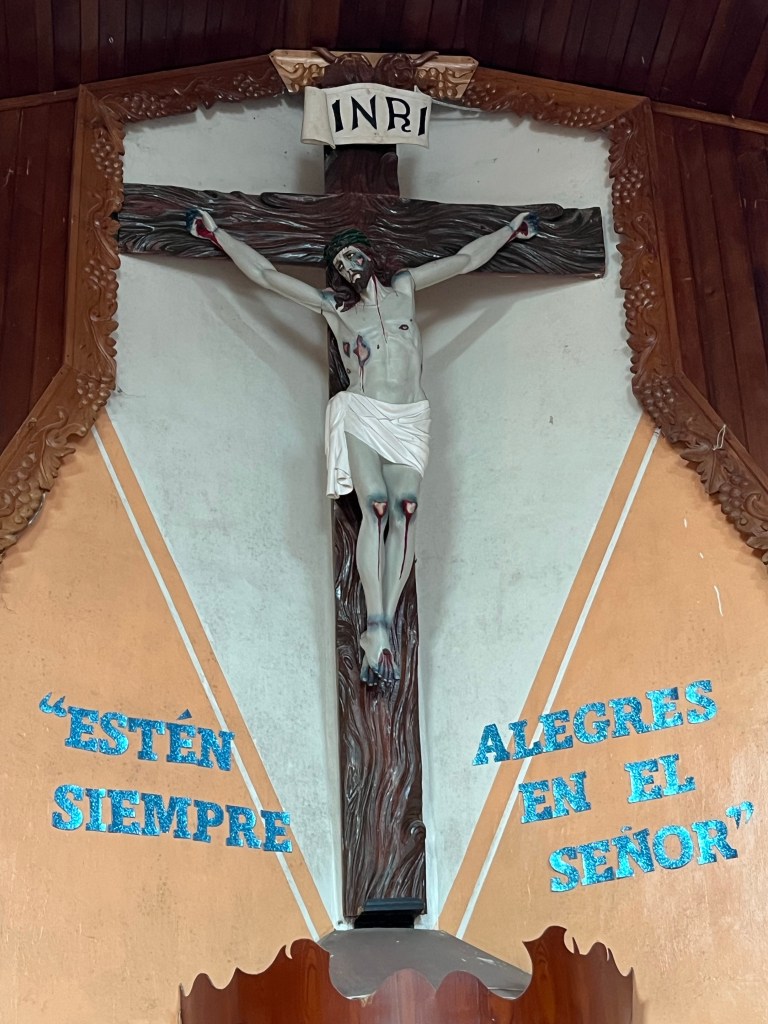
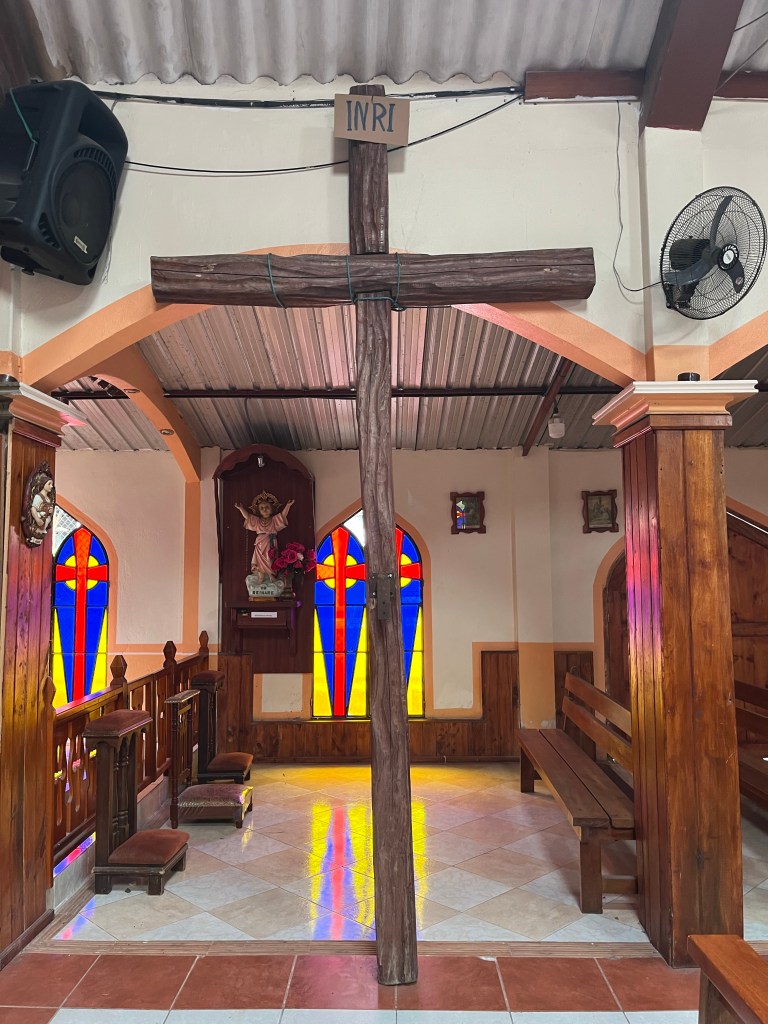
This is a single Catholic Church in town. It is small and quaint. I have seen one other church. While we haven’t walked every street, we have been down many and have walked everywhere in town.
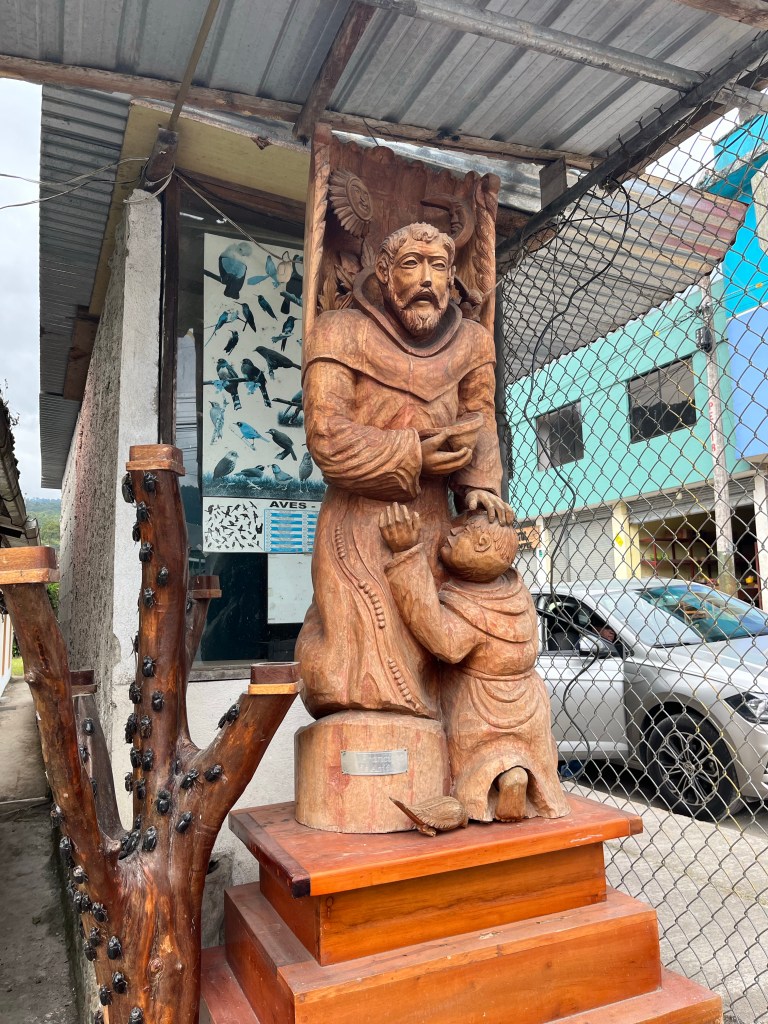
Wood carving of St Francis of Assisi. The tree branch next to him is covered in beetles that have been preserved. They are, however, real beetles called rhinosaras beetles. “Be Always Happy in God.”Adoration Chapel with host holder carved from wood. Cross on the side of the sanctuary that I can only assume is used for reenactments. It is tied up with green cord and has a place that a human might stand for reenactments.
We have bought food off the street from street vendors: cookies and fresh fruit. There are vendors that have carts that can be pushed, hooked to bicycles, some even motorized. There are also trucks that drive around the streets selling fruit or bottled water. The water here is used for washing dishes, showering, etc, but not drinking or preparing food unless boiled.
There are no closed doors in Mindo. By that I mean that everything is open space. Many homes do no have windows and all store fronts are open air. There is no winter here although it’s kinda chilly in the morning. As I write this, I am in track pants and a sweatshirt. Everything is damp.
The main street is lined with shops that are also open air. Several of the grills for the restaurants are located on the street in front of the stores. I think most of the stores have pull doors that close over them at night, like in a mall, but I have not been awake late enough or early enough to see this for myself.
If you can afford to do so, the best home designs are built off the ground. Some are just a few feet off the ground and others have their first floor as their garages. It is naturally dryer in town than in the country and especially in the cloud forest. The hotel where we are staying, Hotel de Libertad, has it’s first floor made from cement and holds the laundry room, the pool, and facilities for the pool like showers and restrooms. Bikes, motorcycles, and cars can be stored here as well for guests or residents.
My current view including humming bird feeders. There are 48 different species of humming birds in Ecuador. We have spent several mornings in the common space watching the humming birds come to the feeders. The sound is the dog rescue place up the street.
The wood starts with the stairs leading to the second floor with reception and several rooms. There are three or four separate stairs that have rooms, and the final one is the kitchen and dining area. There are no screens on the windows. The gathering areas in reception, my morning sitting space, and the kitchen, are all open air. No windows.
Let’s see, what else? Because many people do not have cars, there are taxis readily available even though the town is the size of Ellsworth. Taxis will take you to any tourist attraction in the mountains, and even the airport or the coast. I would assume they would also take you to Quito for your big city needs, but a bus would be much cheaper.
Tourists, gringos, and locals. Not bad. Three cultures for the price of one. Thank you Keri, Paul, Grace, Estepha, Leo, Wendy, Jeremy, los gringos, y la gente de Ecuador.
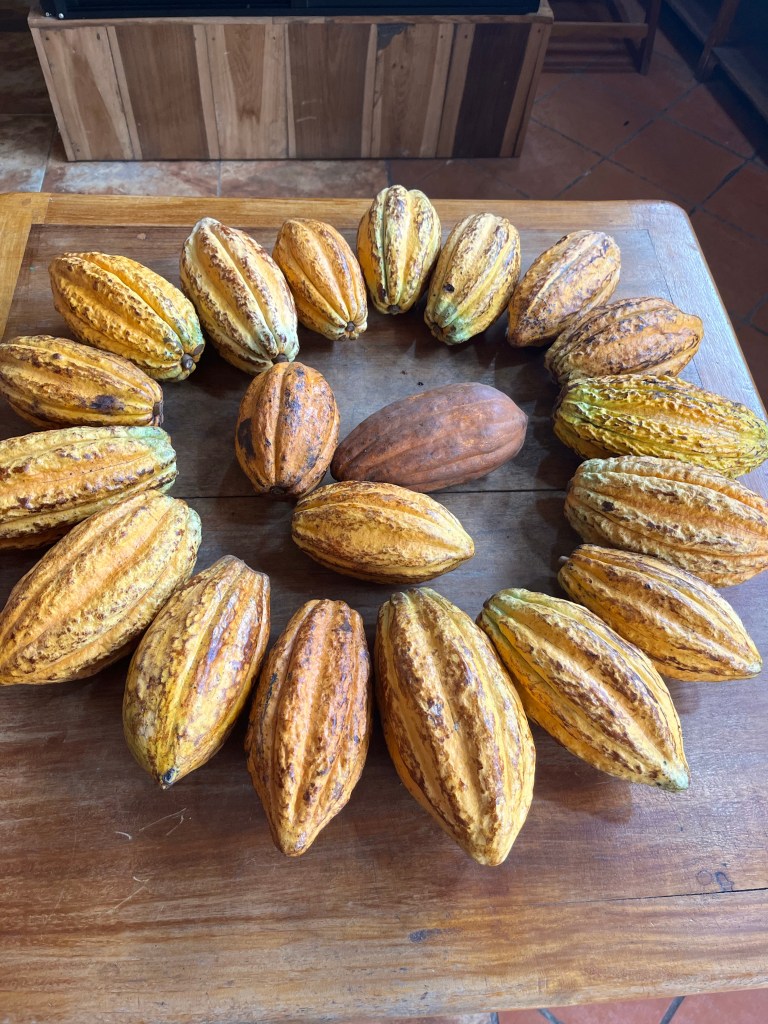
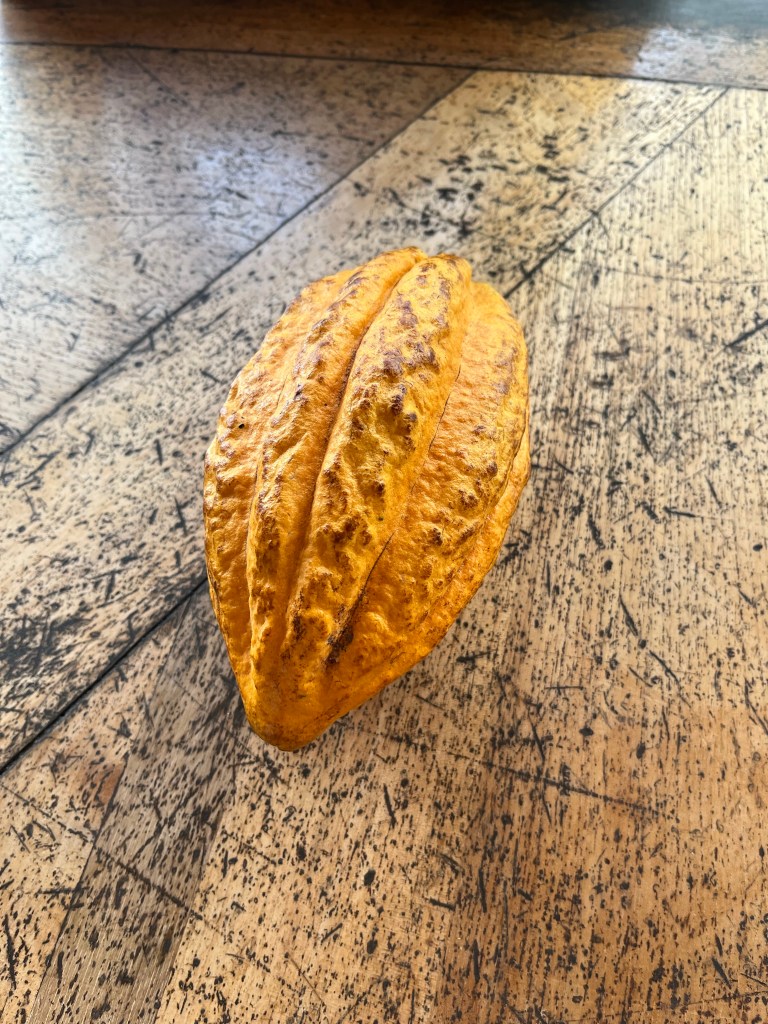
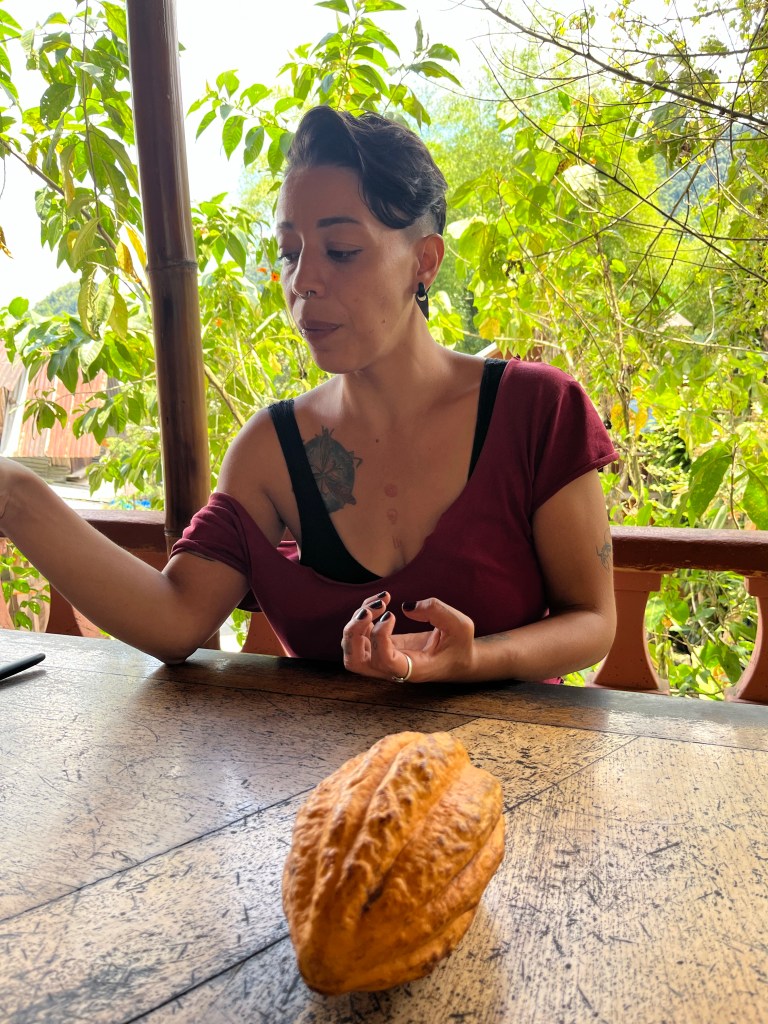
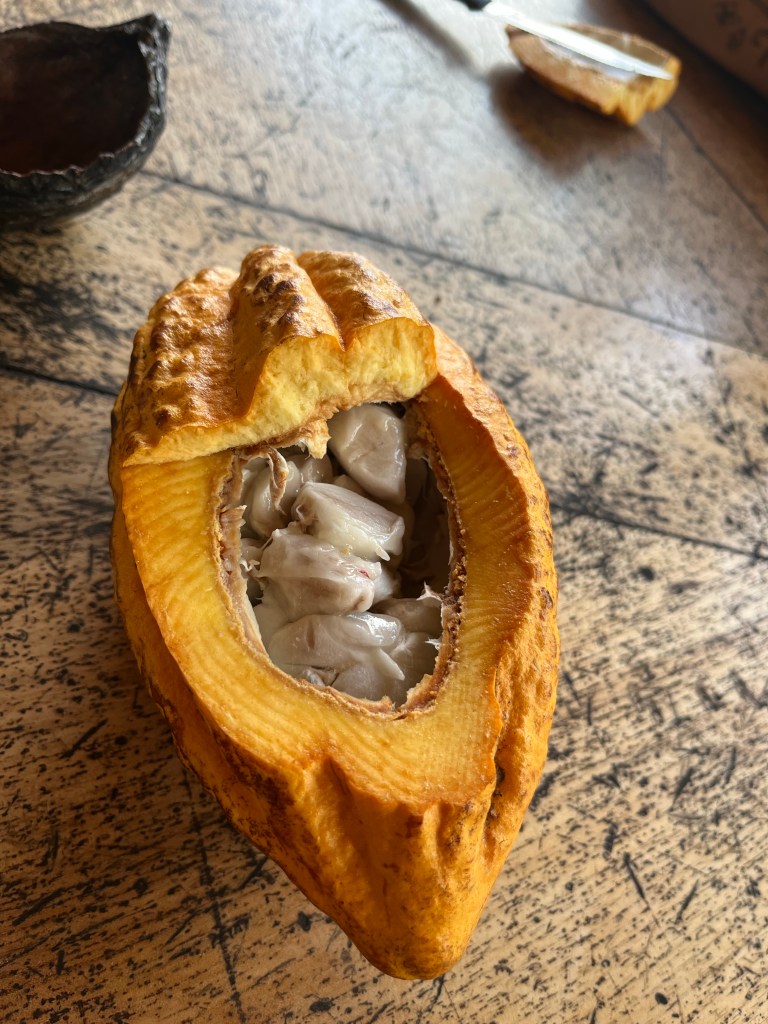
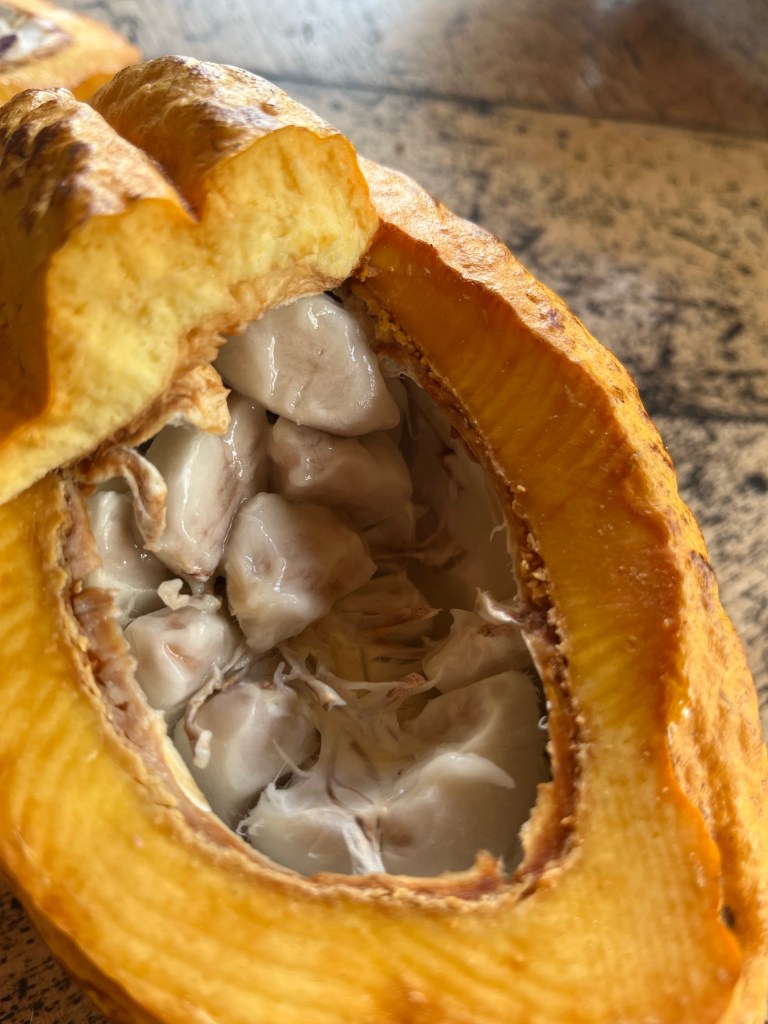
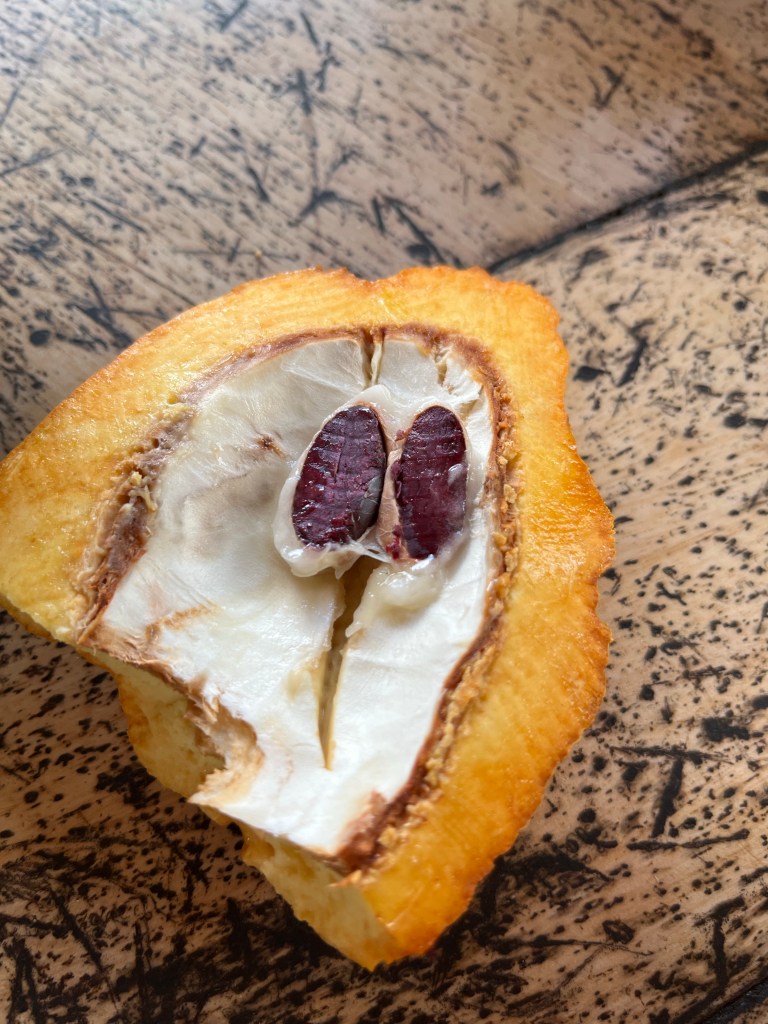
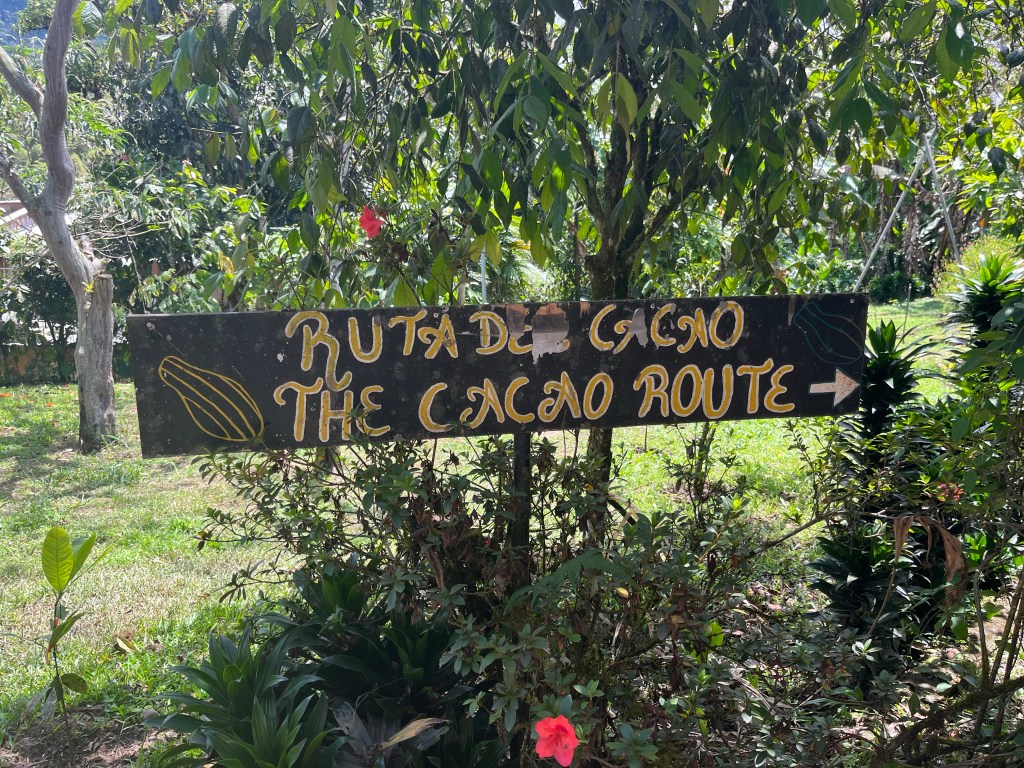
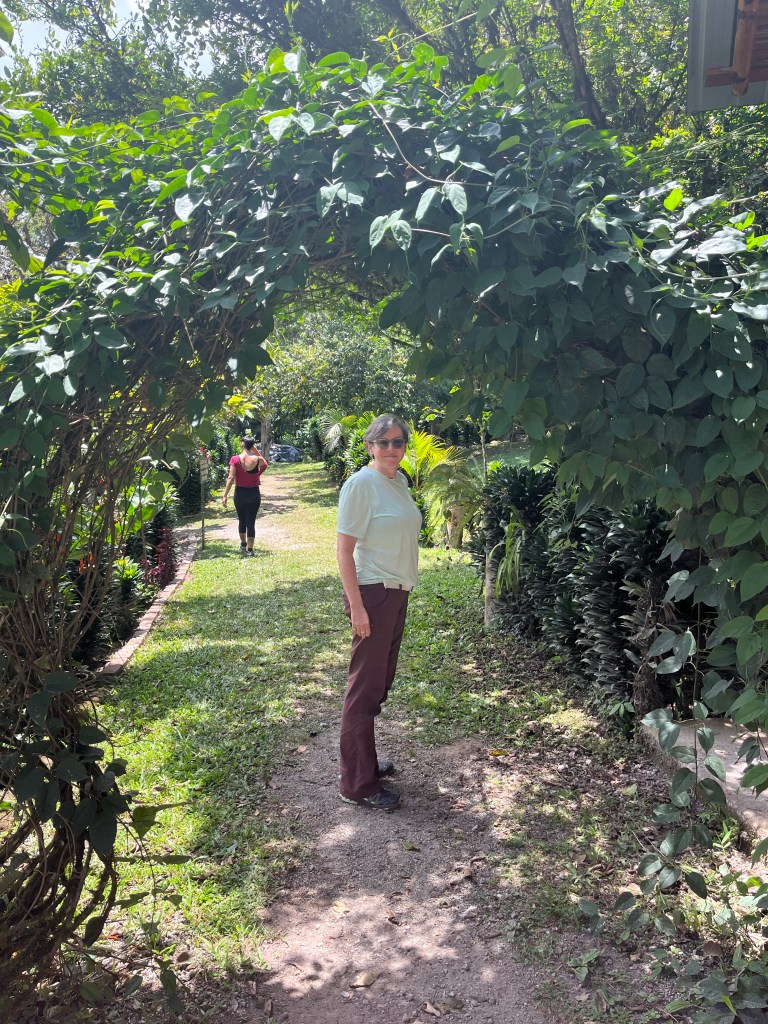
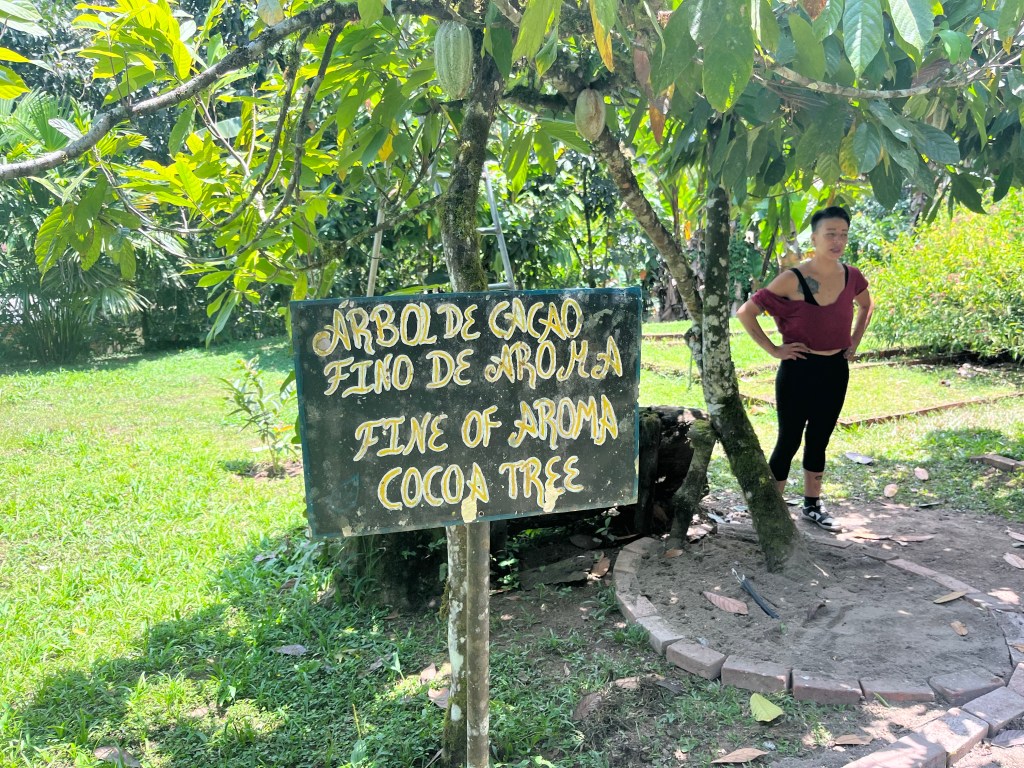
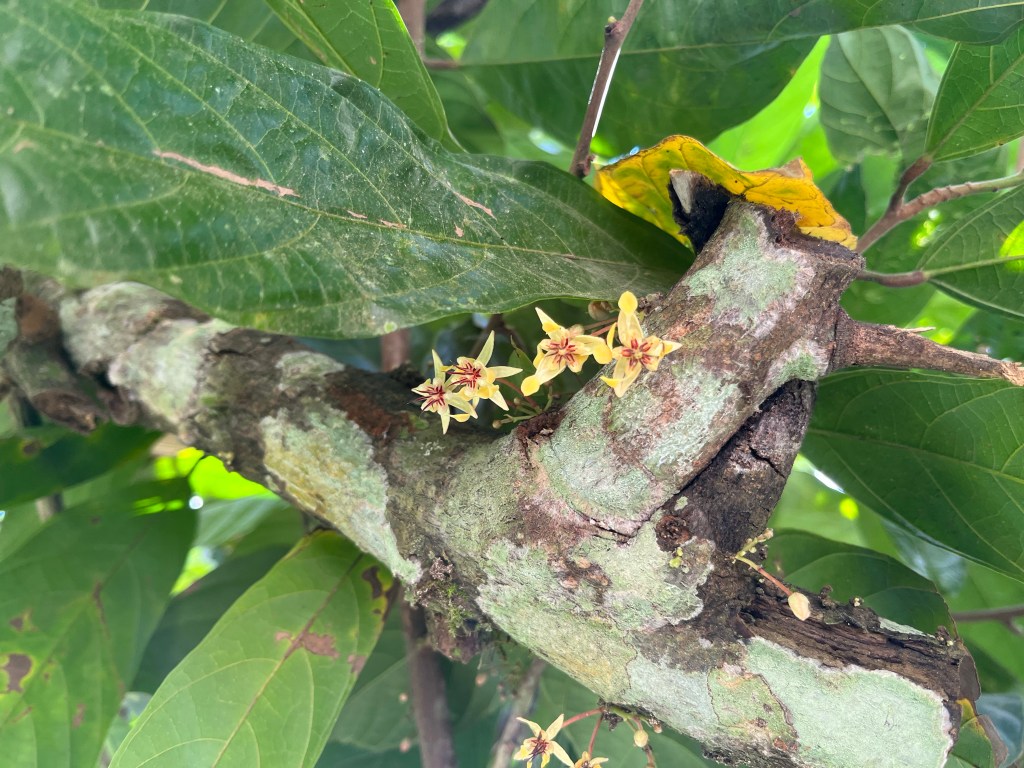
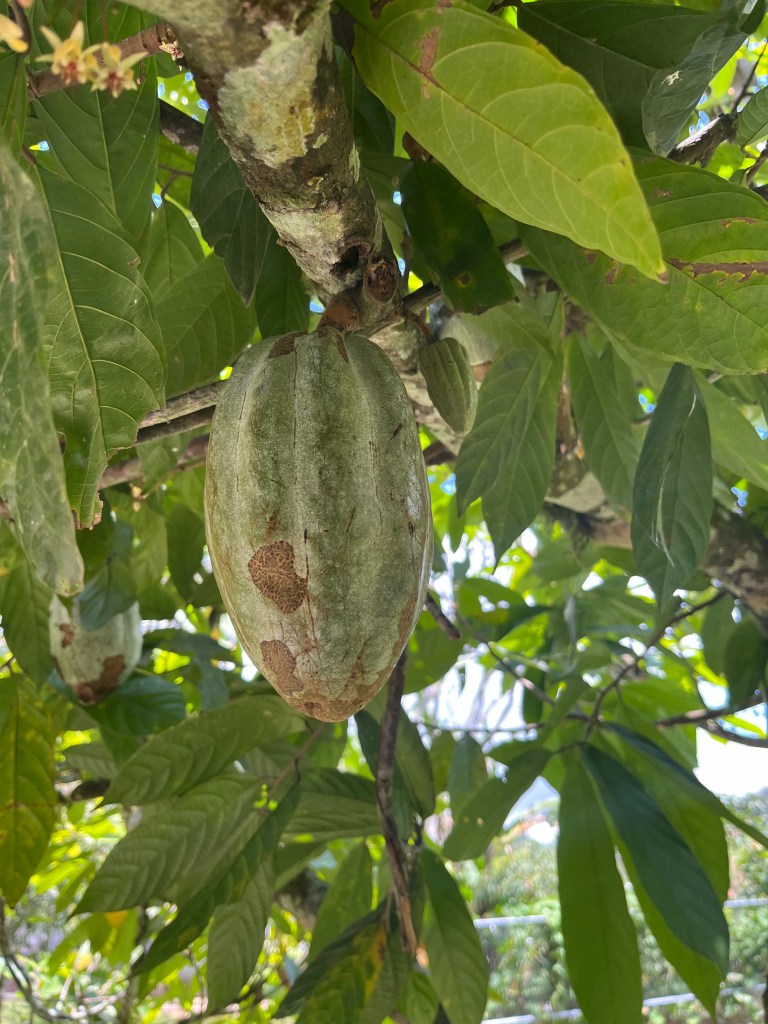
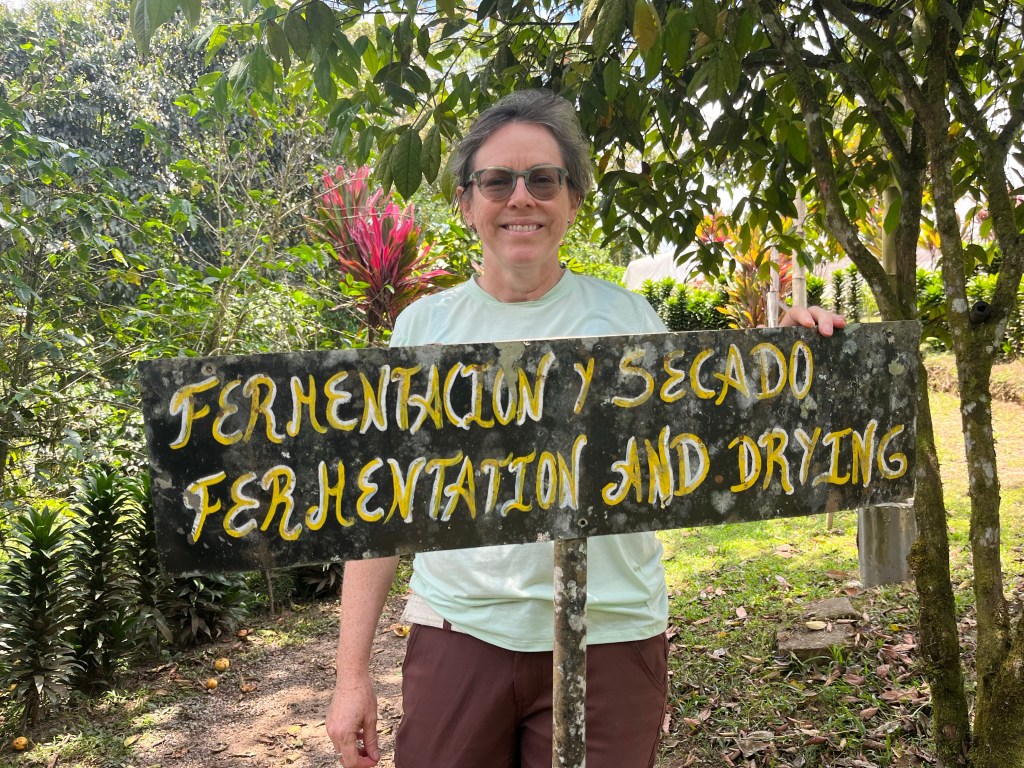
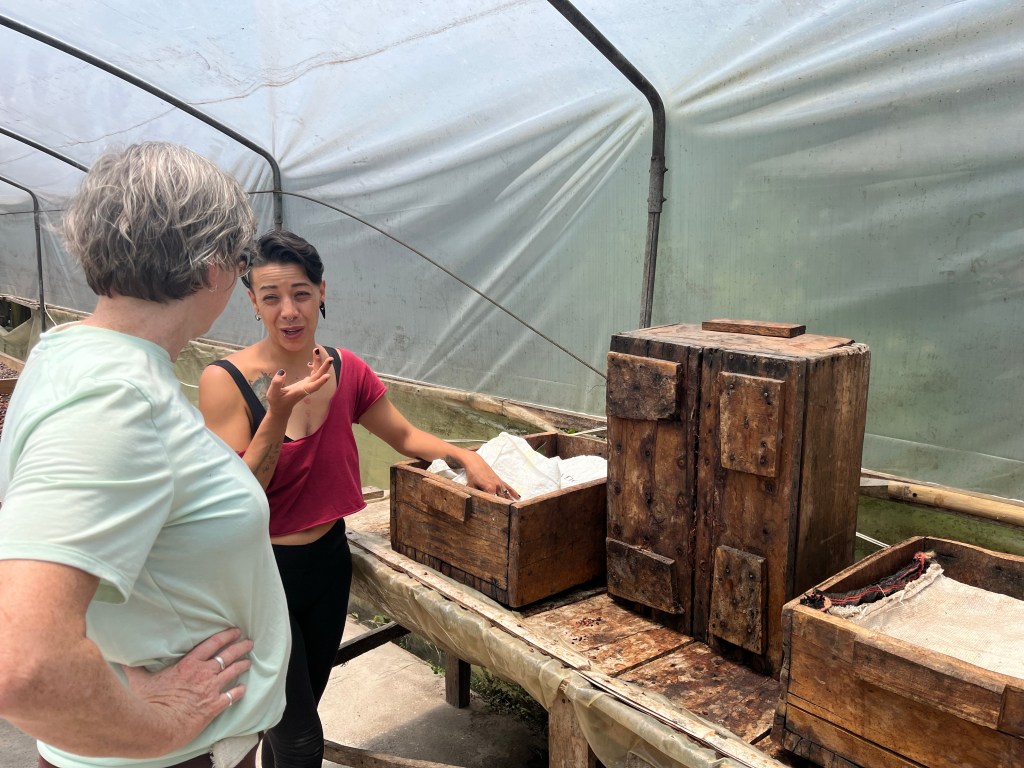
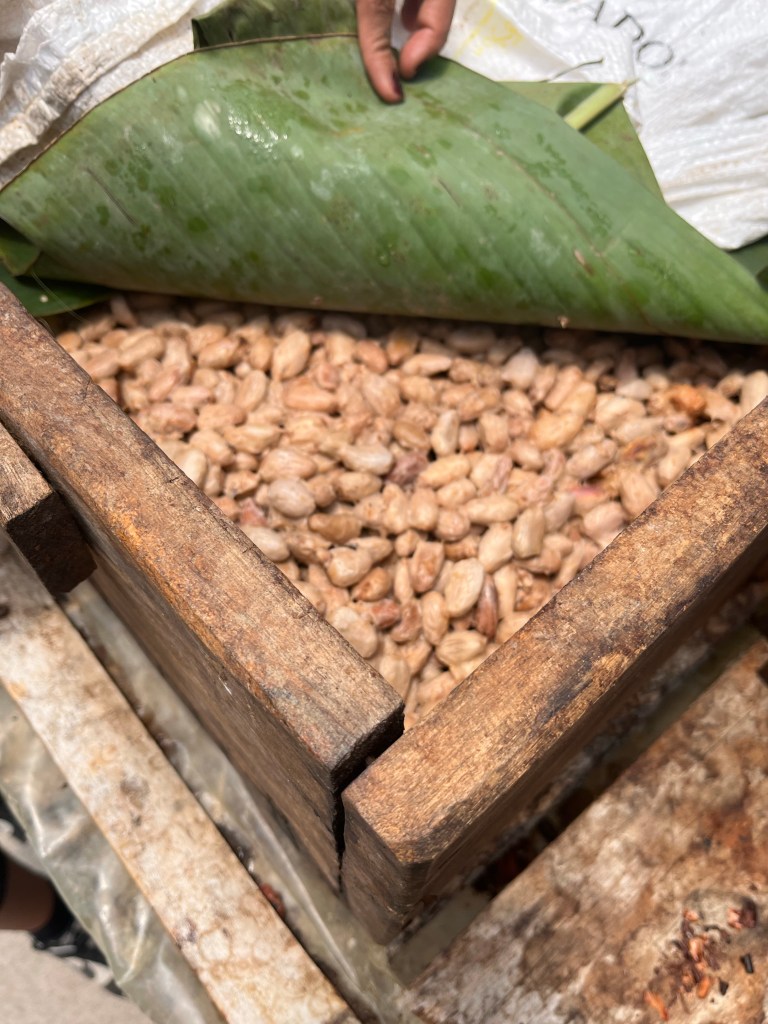
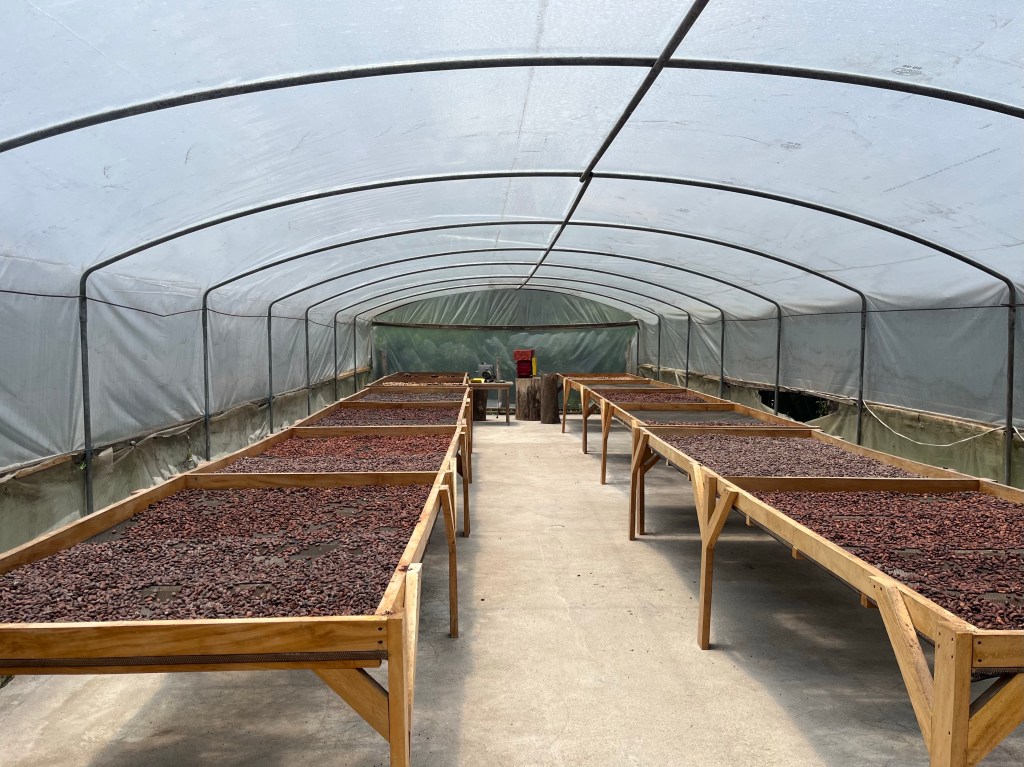
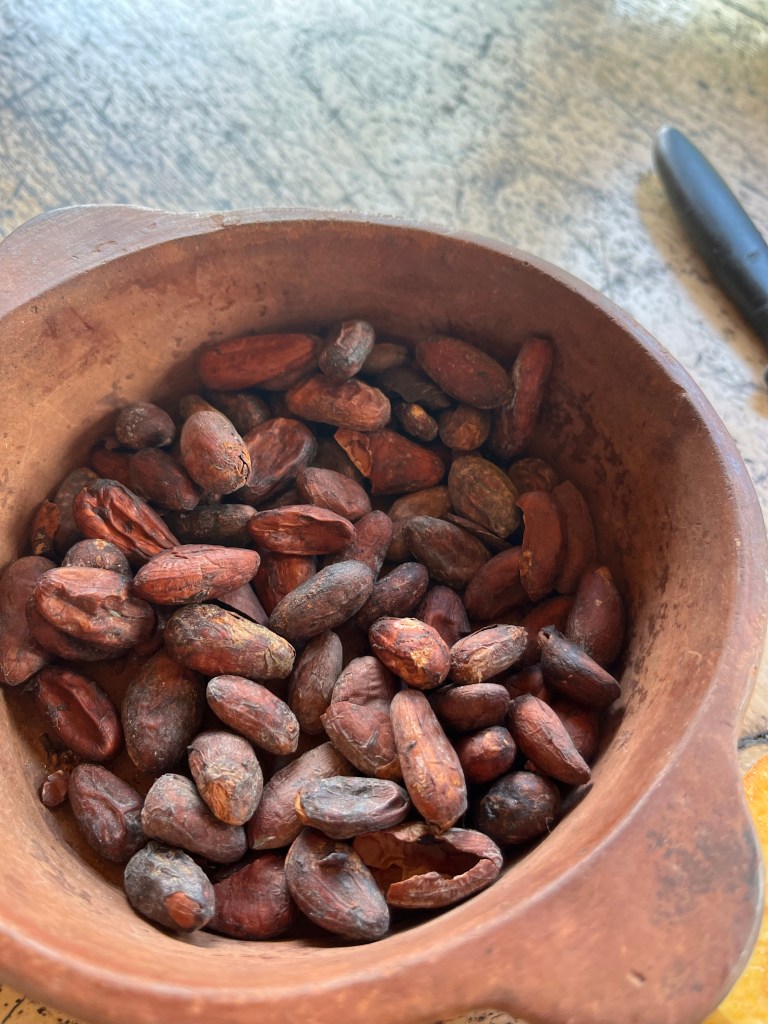
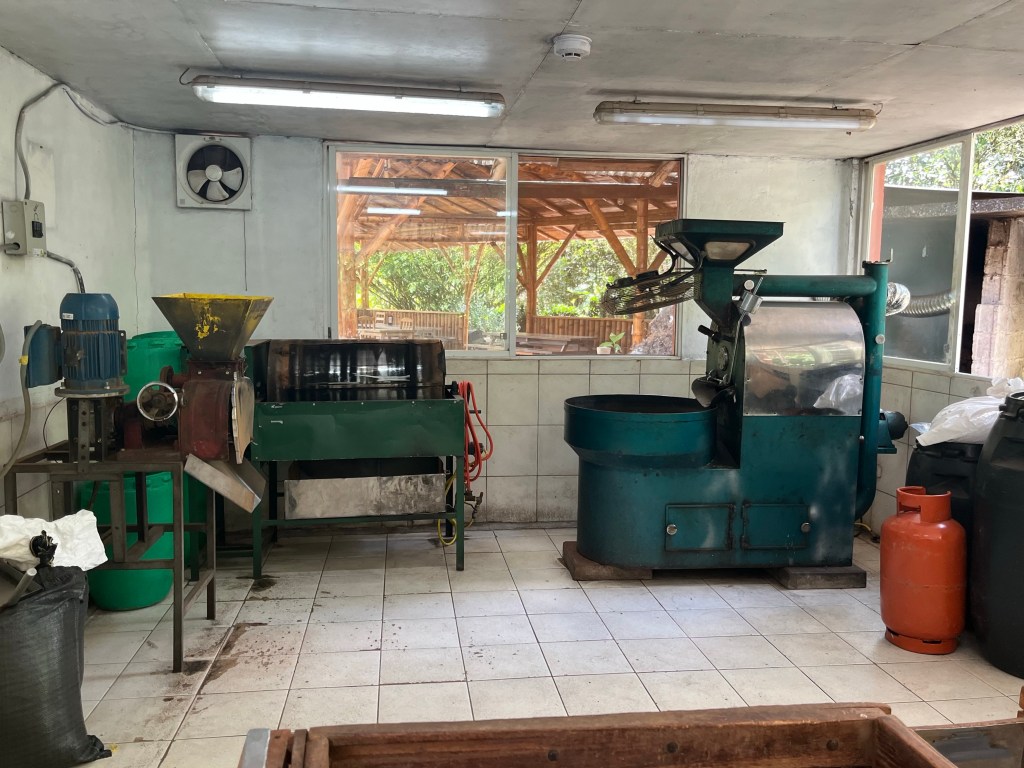
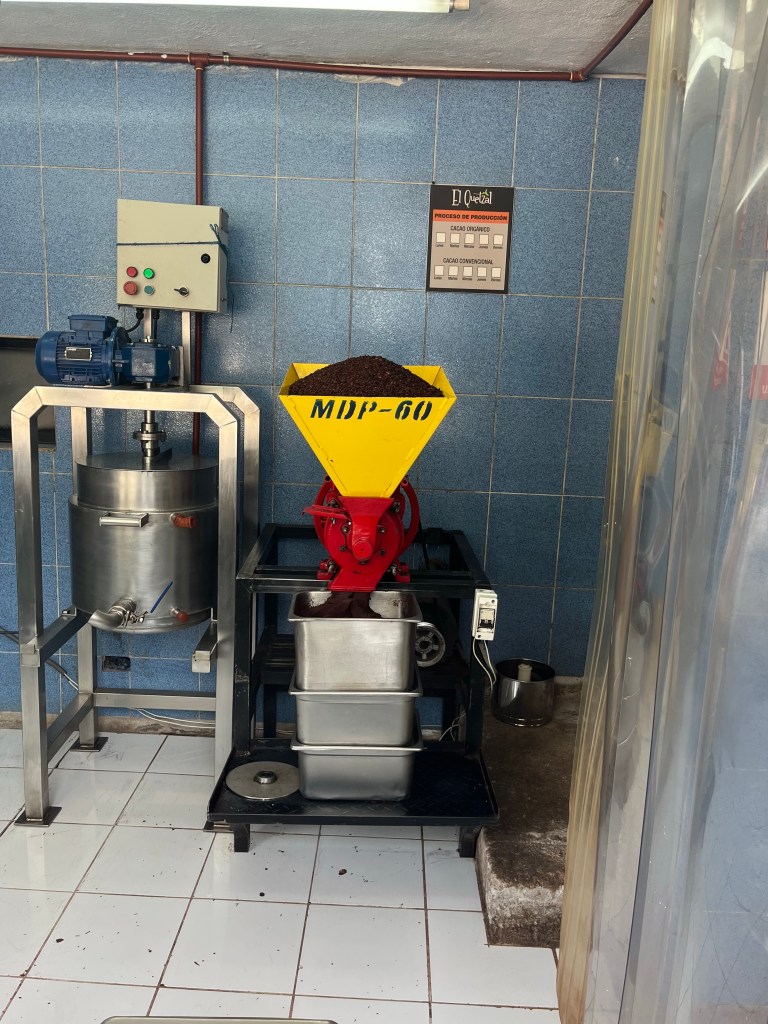
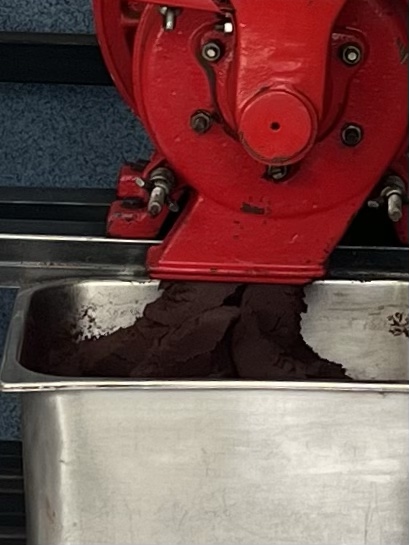
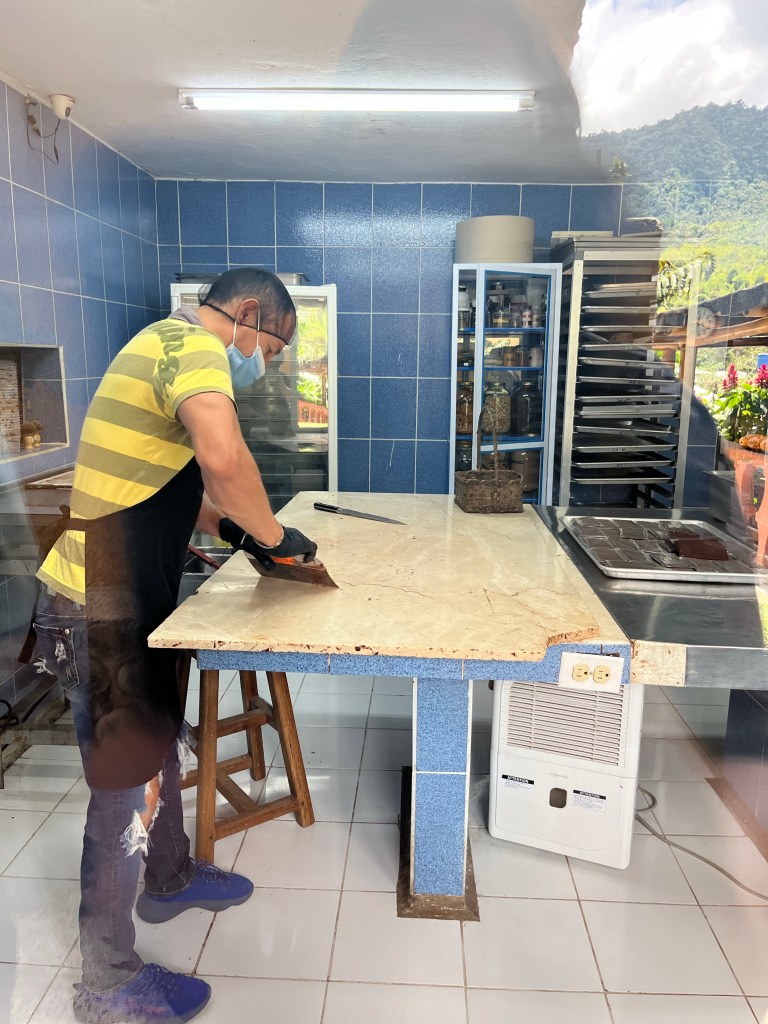
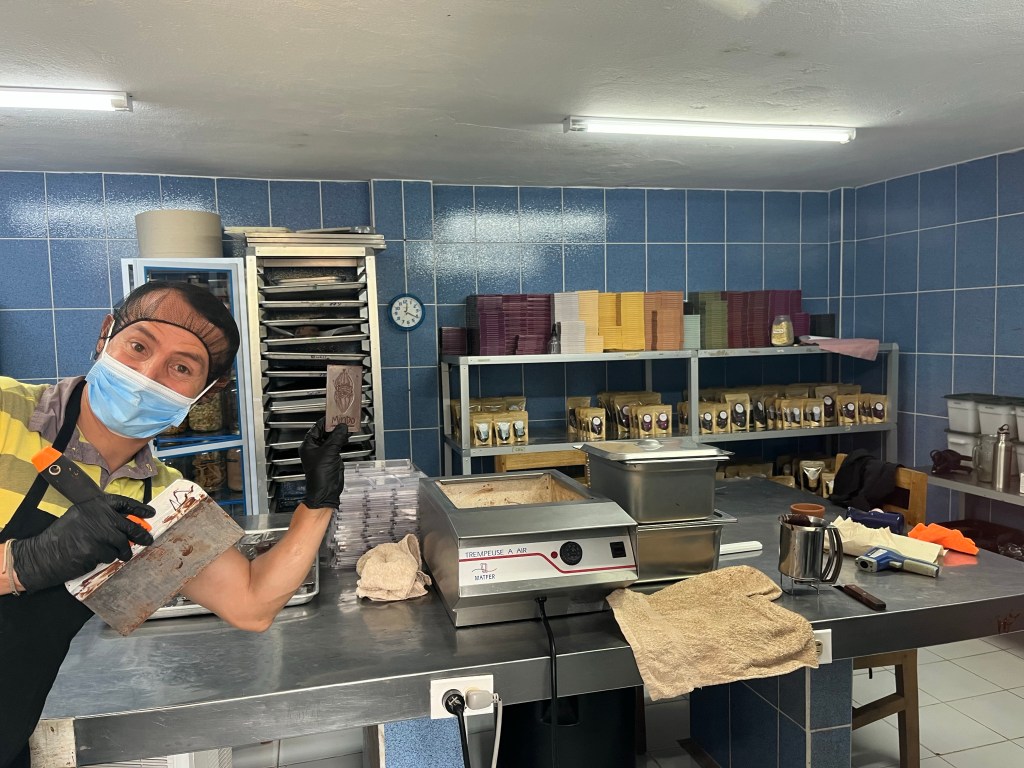
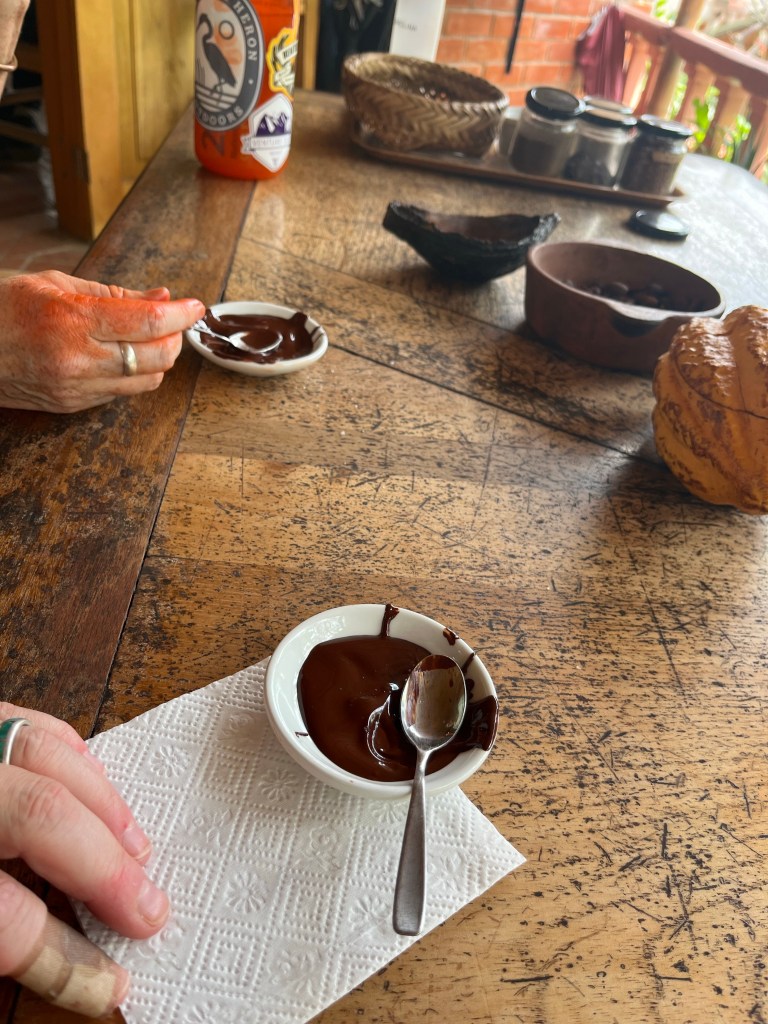
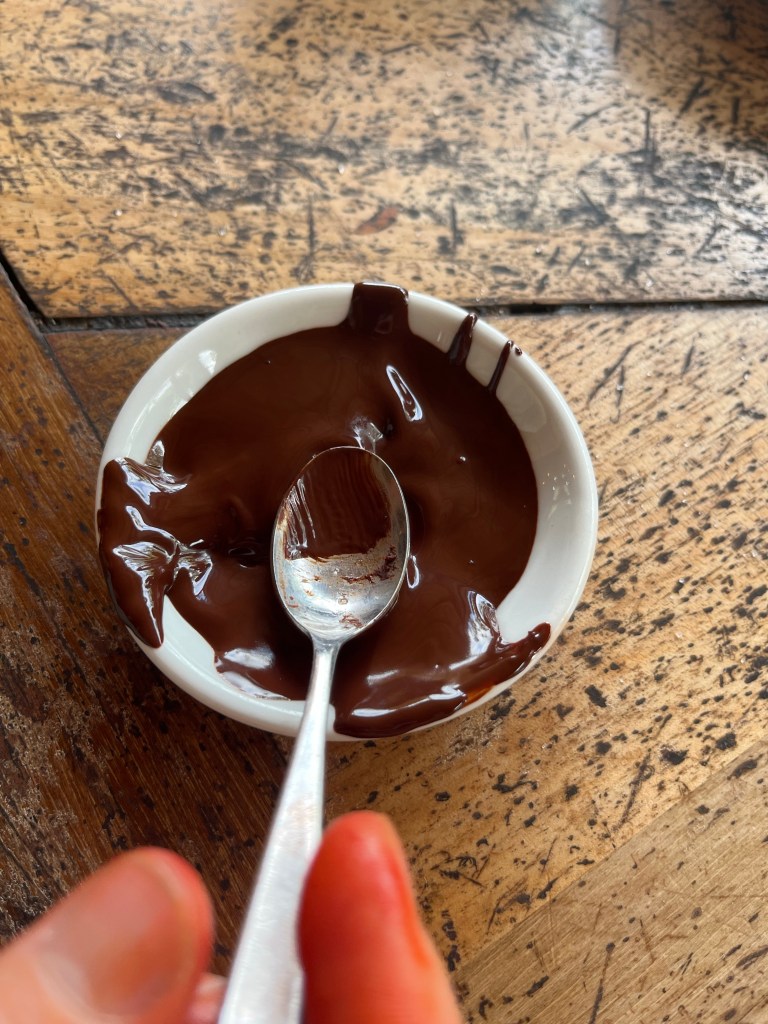
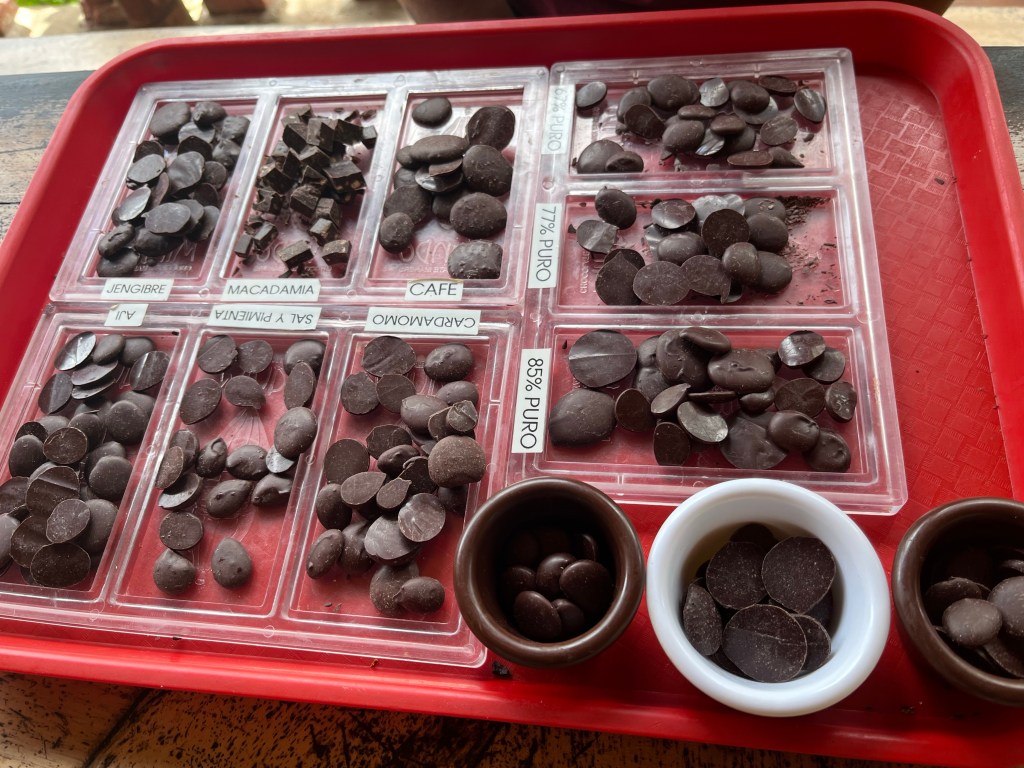
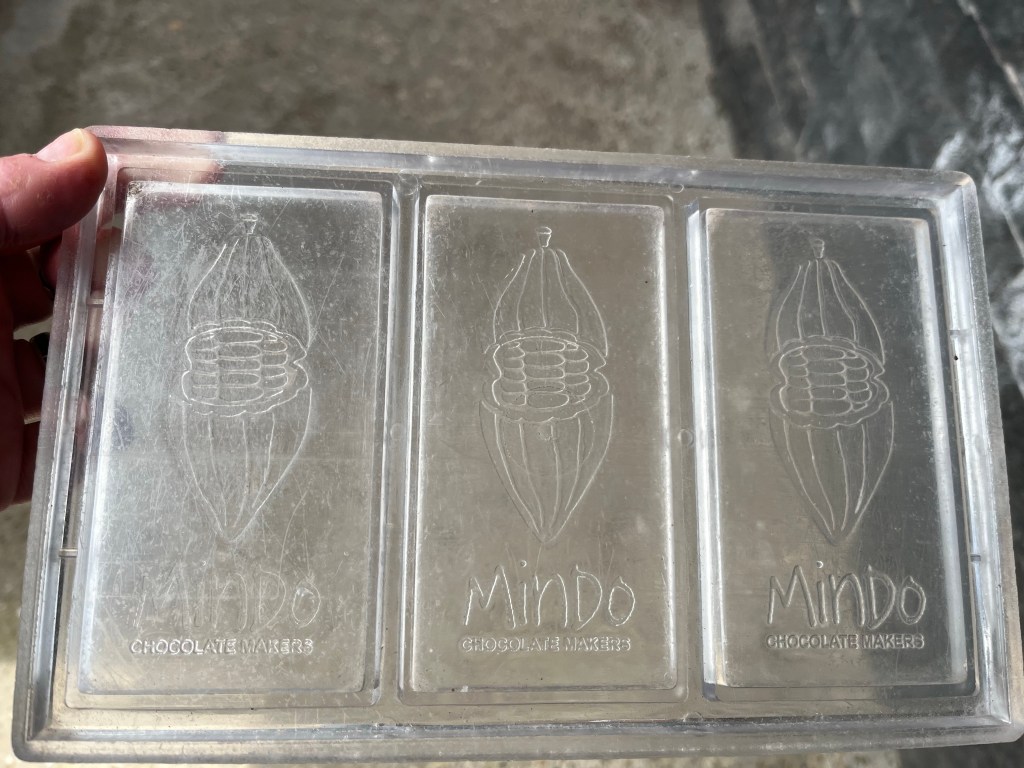
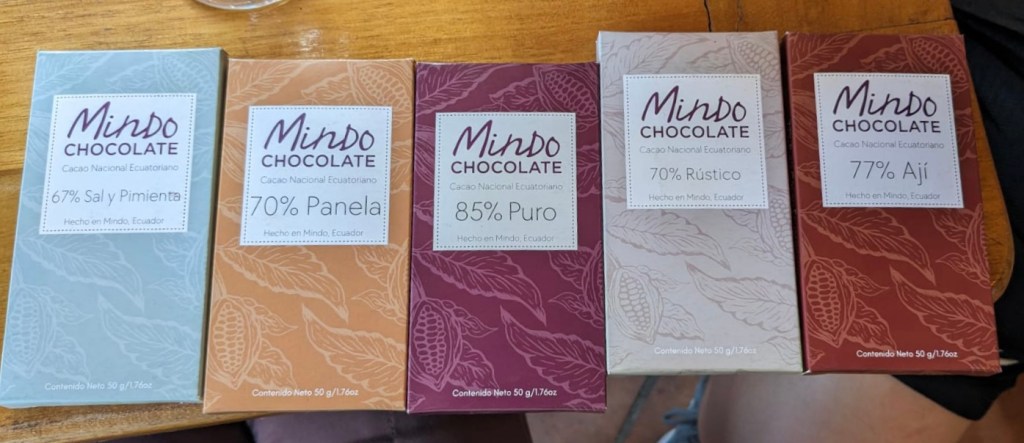
These are the fruit or the pods of the Cocao tree.This is the single fruit we worked with.This is Carolína, our guide. Carolína cut the fruit without cutting into any of the seeds. She said that if you cut into any of the seeds, you release bacteria into the entire fruit and none of the seeds would be useful for chocolate. Close up of the inside of the fruit with the cocao seeds. The fleshy part of the seed is had an awesome sweet tart taste. We each got to suck on several. The texture was wet and cool. The pure cacao seed cut in half. That is the most raw version of cocao. If you were to bite into the cocao at this stage, it is super bitter and raw, kind of like a peanut or a coffee bean. Carolína said that it would suck the moisture out of your mouth. It is worth stating that there is no sugar in cacao. We add that as humans. It’s quite bitter in it’s natural state. I am personally not a fan. I like my Hershey’s with all the milk and sugar that they can cram in to it. Cacao in it’s natural state is nothing like a Hershey’s bar. Headed out to see the Cacao trees. This picture shows the Nacional Cacao tree. It grows about three feet and then splits off. It does not start producing fruit until it is three years old. The seeds take on the flavor of nearby plants. For example, if you plant vanilla close to a cacao tree, you will have a hint of vanilla in your cacao seeds. Although you cannot see the base of this tree, this is the hybrid called CCN51. It was developed in the 1970’s but did not become popular until the 1990’s. This tree produces fruit in two years. It also produces twice as many fruits to be harvested. The down side is that it does not have as much flavor or variety of flavor from seed to seed. The farmers and producers of chocolate like it, however, for obvious reasons. This is the flower that turns into those huge fruits. The flower is pollinated by mosquitoes. It’s super tiny compared to the giant fruit that comes from it. Notice the tiny flowers in the top left corner of this picture compared to the fruit in the center of the picture. These are the fermentation boxes. They ferment the seeds for two weeks flipping the boxes every 24 hours. The fermented liquid drains out of the boxes and is caught in containers below for booze de cacao. Nothing is wasted. It was hot as shit in this greenhouse. Easily 20° hotter than the temperature outside. The moisture is kept in the boxes with banana leaves. The boxes must be carefully maintained as well since the seed could still take on any flavor they come in contact with. The drying process. This was in the same greenhouse as the fermentation process. Dried cacao beans that have not been shelled. We tasted five different cacao beans and each had a slightly different flavor. Here the shells of the seeds are removed after drying. They use the shells of the seeds for cacao tea. Again, nothing goes to waste. This machine takes the seeds and turns them into a thick paste. Here is a close up of the gritty paste. 100% pure cocao which contains the cacao oil. Then the paste is put into this machine that grinds in stone on stone at over 100 degrees. I can’t remember how long they did this. Here she stated that the shiny color starts to come out so you know if it is good chocolate or not. She also stated that these two types of trees do not produce bad chocolate. The chocolate is them moved to a cold room which is 70 degrees. The chocolate is poured into molds or drops and sold as bars or bags of drops. 100% cacao does not melt like milk chocolate. For example, the “cold room” and the loco chico are at 70°. 100% melted cacao. When we tasted this, it is bitter and sucks the moisture right out of your mouth. Your whole mouth becomes void of moisture and you have to lick the roof of your mouth and lips to re-moisturize. It was rough on this milk chocolate lover but I loved the experience. 100% melted chocolate. The final product and taste test of the different percentages and additives. 67%, 77%, 85%, cafe is with coffee, macadamia is obviously with the macadamia nuts, jengibre is with ginger, ají is with hot pepper, sal y pimienta is salt and pepper, cardomomo is cardamom. The front three were sugar, raw sugar, and 100%. The molds for the chocolate bars. Examples of the final chocolate bar product.
It’s pretty intense the things we do for travel. We deprive ourselves of sleep, comfort, regularity, routine, home. We save and plan. But if you have the travel bug, there is not much you can do to suppress it for too long.
We save up our vacation and take time from work. We enlist our friends and family to watch our dog, our house; take us to the airport at god awful hours. Or we semi-abandon our cars in parking lots. We take cars to busses, to trains, to planes, taxis, hikes, bikes. We put ourselves in dangerous places. We visit doctors and get shots. We bring medications and comforts with us. We converse and dream. We research and look at pictures of far away places. Exotic plants and animals; people, food, destinations and places on the way. We plan timing and location, things to do, experiences to be had. We hire guides and talk to strangers. All in the name of Travel.
I have long called myself and experientialist. I have traveled to many of the places that I have on my invisible list. I have done many of the things I would like to do.
This particular trip started with a grand plan, as usual. This plan was a loose plan. There are certain points we need to hit like flights, but the soft center is quite open. Stay tuned for my final review on the when, but my lovely wife, Angela and I both got off work at 5pm on a Friday. Our flight was not scheduled till Monday morning. The same is true for coming home. We arrive on Friday and will still have the weekend before returning to work. This sounds like perfect timing to me, time to get ready, and time to decompress.
I don’t think I can continue without acknowledging my privilege. For me, as a recovering alcoholic, gratitude and privilege tend to be intertwined. I could not speak on my privilege without speaking of my gratitude and versa visa. I don’t know if my gratitude changes my privilege. That is an entirely different blog post.
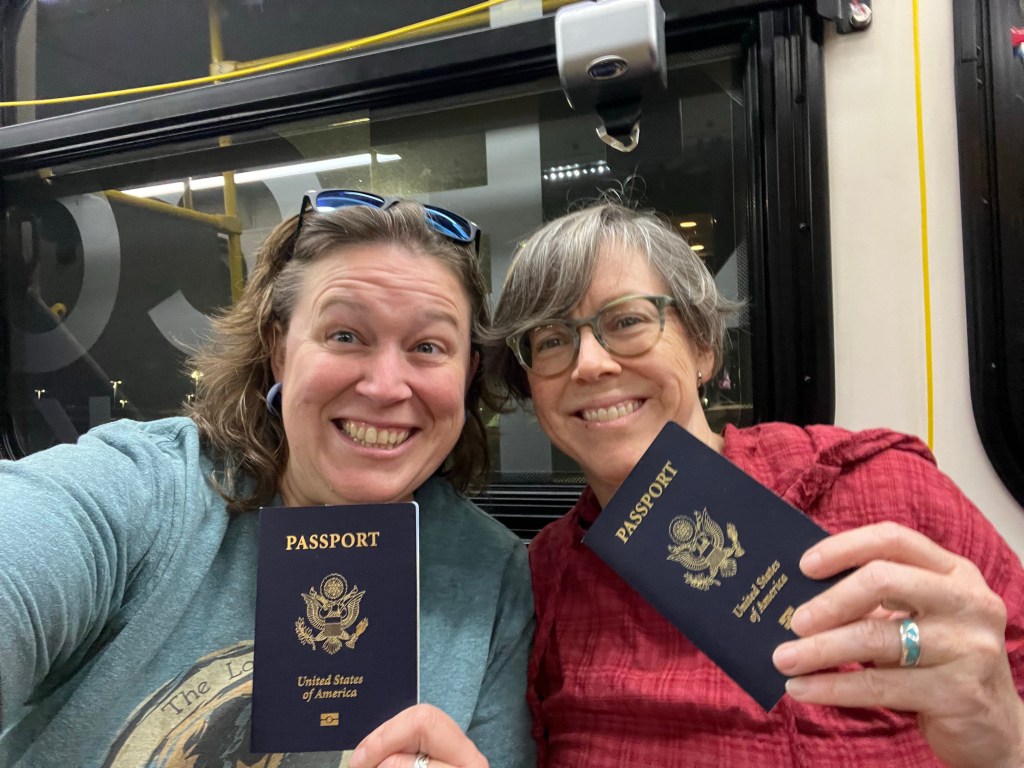
3 am on the shuttle bus from parking lot to airport.
One of the many many gifts of this trip was that we were able to each take two full weeks off of work. We have weekends bookending our trip. I think that sounds divine. Our first morning started at 1am getting up in order to catch a 5am international flight. I don’t know if things are more relaxed at airports or if people who use airports are just more used to all the hullabaloo. In any case, We were up at 1, on the road by 2, and in the airport by 3 for a flight at 5. I didn’t think much of it until I started to calculate when we would be arriving in Quito, Ecuador. We had a 9 hour layover in Miami, where we decided to hit the beach and get some Cuban food. Sounds simple enough. And before I go into the full story, I want to say that we nailed it. We were back in the airport with plenty of time to catch the flight. Some of you may remember that we were not quite that lucky when leaving Chicago that one time.
I love traveling in big cities and taking public transportation. It’s always like a puzzle that you need to figure out. Our greatest delay in our Miami travels was figuring out how the hell to get out of the airport. Once we nailed that, we found a very friendly public transportation worker, told her our plans for the day, and she guided us on a day pass for the buses. We hit the rail out of the airport, then hopped a bus to Miami Beach. The bus dropped us off two blocks from the beach. Minutes later, we were on the beach staring into the Atlantic Ocean.
We had come directly from the airport, so we were still wearing travel clothes but had our swimming suits with us. We grabbed a little fold up cabana thingy and changed in the sand. A few minutes later, we were in the ocean. The waves were soft and the water was warm but not too warm. The sand on the bottom was gradual enough that we were able to go out quite far and still be able to touch. If that was what got us into a little trouble, it’s hard to say.
At some point, we started seeing translucent objects floating around us. The first one I saw, I let pass without much of a thought. The second looked like some kind of mesh trash. I reached out and touched it. It was smooth like the sting rays we had touched in Chicago. I knew just enough to know that it was a jellyfish and that they stung so I pulled my hand back. At this point I was feeling little stings here and there. All of a sudden we were engulfed in jellyfish. We quickly swam out of the area, but not before Ang was stung in the back of her leg. I was feeling little stings here and there. I’m sure for all the ones we could see, there were probably many more that were smaller. Ang was a pro, very calm and cool. We left the water and she promptly peed on herself, letting it run down the part of her leg that had been stung. I believe she was still feeling pain for a little while, but managed to keep it decently in check. She was always calm.
About the same time, a storm rolled in, so we were forced to pack up and find some shelter. I was kind of grateful for that since I was feeling some smaller stings on my thighs. Jellyfish can be quite small, so I didn’t know if I had any caught in my shorts. We packed up and headed back off the beach to the nearest overhang. You quickly realize that you are out in the open world with no car, no home, etc, when a storm rolls in and you have no shelter.
We found a hotel overhang and hung out while we decided what to do next. As it started to rain harder, I rinsed the salt out of my hair and swim shirt and shorts in a run-off from a roof on the edge of the hotel drop-off spot. Something like that can make you feel so alive. Away from home and rinsing your hair in the clean water Mother Nature is providing. Also the stinging stopped.
After the quick and wild ride of several emotions, I was pretty spent and not fully funcional as we decided what to do next. Cuban food. But where and how do we get there? I searched for an Uber. She suggested a coffee shop to regroup. My solutions was something like $20. Hers was a two minute walk after we got our bearings. Since we each paid something like $2.50 for the day bus pass, $20 was a large increase. Instead we found Starbucks literally across the street. We were not alone either since the storm had sent all the beach goers away. We dried off and searched for a Cuban restaurant.
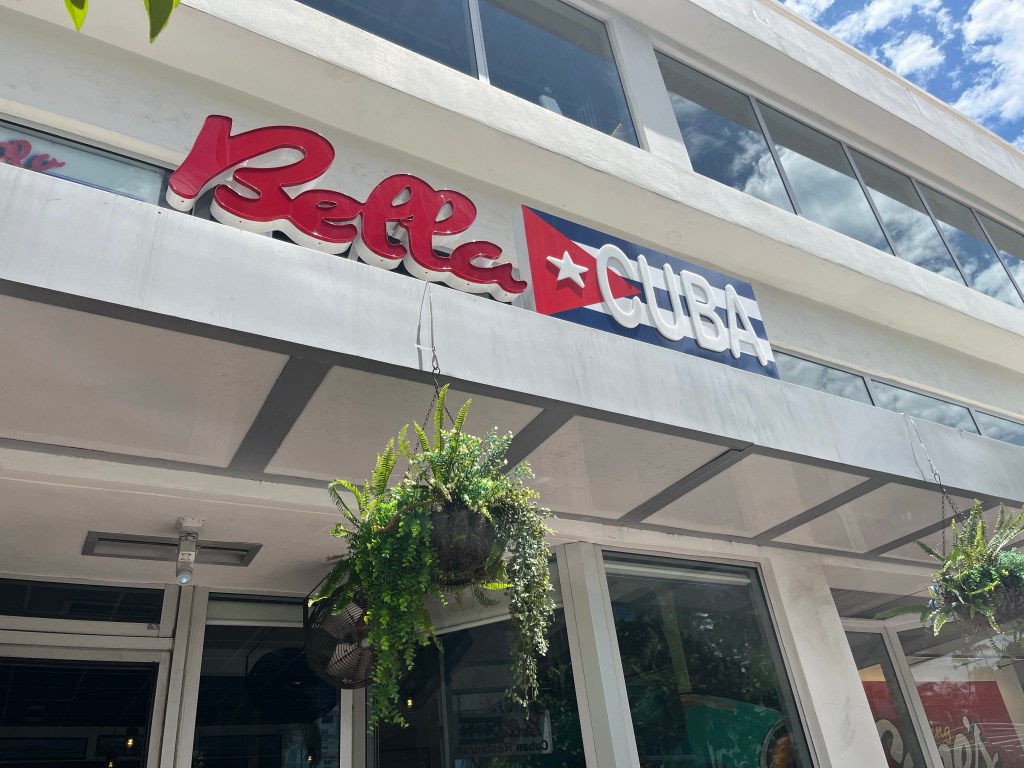
Two tries and about a mile later, we walked into Bella Cuban Restaurant.
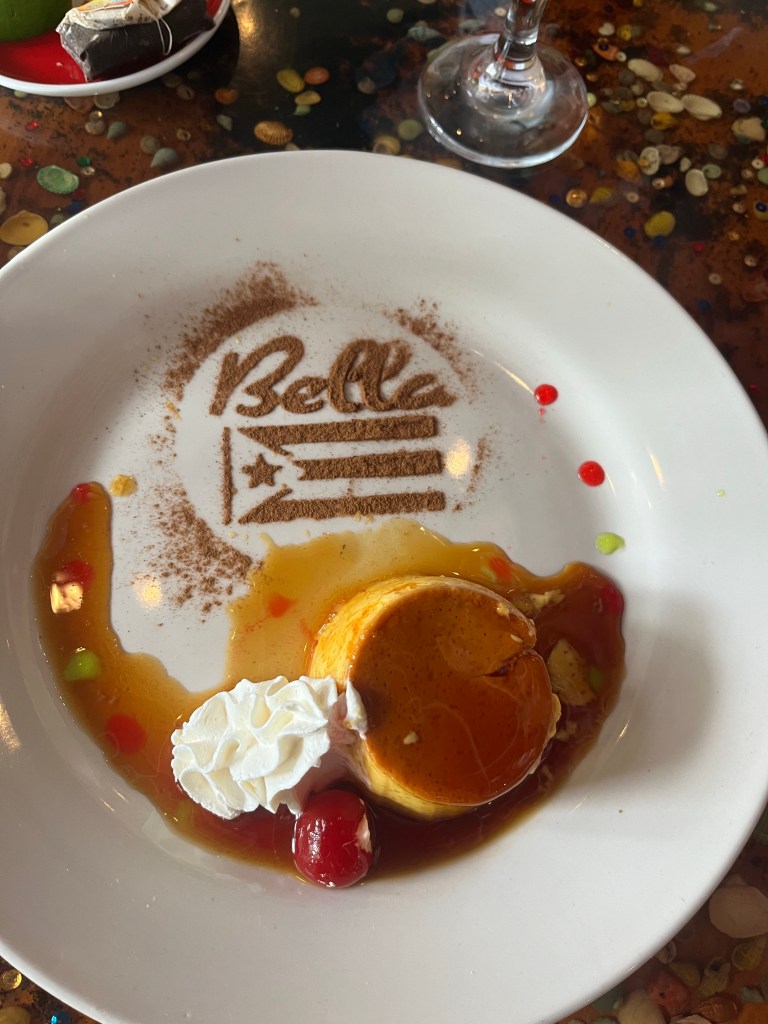
The appetizer we ordered was half and avocado with shrimp and greens. When it arrived at the table, it was massive. Neither of us had ever seen an avocado that big. Main course was a traditional Cuban sandwich with pulled pork and Swiss cheese. I’m sad to say that the pork was dry, but there was a strange sauce on the side that made it manageable. It was something like mayonnaise, but orange. For dessert we ordered caramel flan. It was divine.
A little bit of caramel and the cinnamon from the decoration on the plate made it incredible. I found out quickly with a small test that the dark brown liquid was rum instead of caramel, so I steered clear of that part, but otherwise, marvioso!
At this point, I think the time was creeping into midafternoon. Our flight was at 6:57. We wanted to be back to the airport about 4:00. We had already walked about a mile with backpacks and such, so the nearest bus stop back to the airport sounded like a plan.
There is a similar bus in Mexico City, maybe for folks just like myself that have a layover and want to see the city. It goes from the airport to downtown in the touristy spot and back. Again we hopped the 150 bus right back to the airport with minimal stops. One direction was about 40 minutes and again for about $2.50, beats a $40 Uber for these travelers any day.
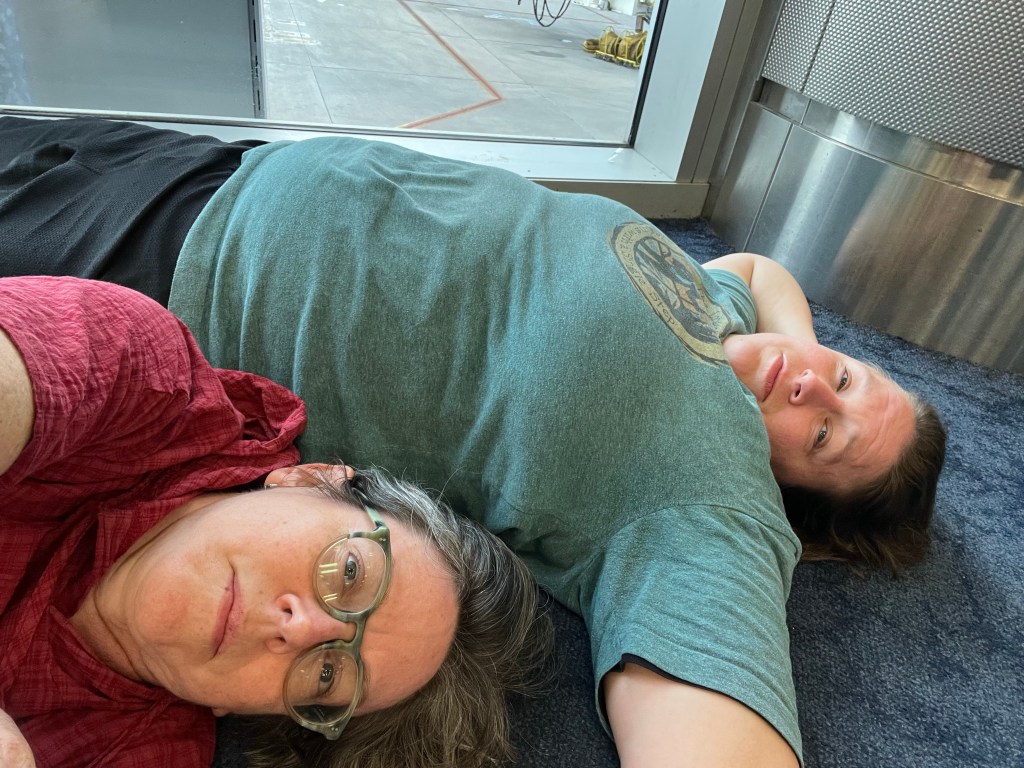
Back to the airport and through security again just so we could lay on a hard dirty floor and wait for our next flight. Ahhh, travel. We were asked by speaker and Angela’s great detection skills to change gates where we did more laying until boarding. Boarding an airplane is always an adventure in itself to stow your crap in the overhead and find a tiny little seat in this cramped space. Our first flight was half empty so we got our own rows, but this one was full, and longer.
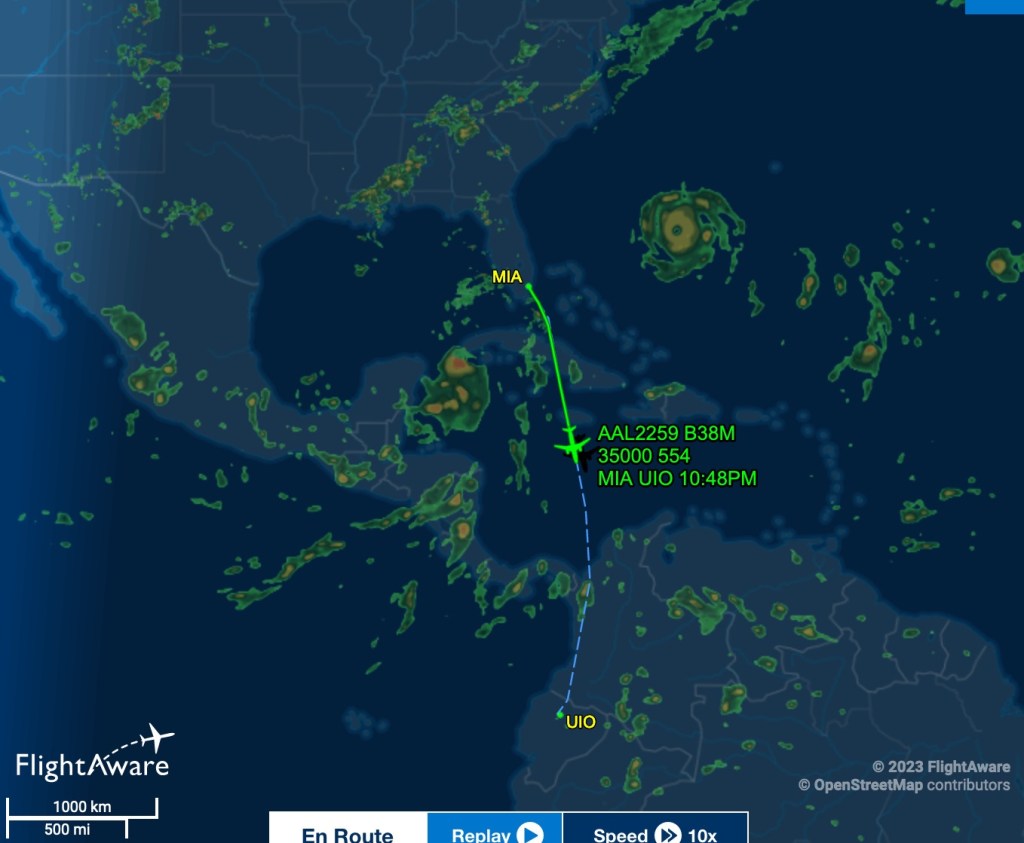
Turns out that the flight was about an hour longer than scheduled because we had to divert between two of the storms coming in to Florida.
Not really knowing any of this, we sat on this plane wondering, has it been four hours? Did the time change back from East Coast time? We were both too tired to calculate it. Once we arrived in Quito, another burst of energy got us off the plane a to wait for our luggage and find our friends who awaited with smiles and cameras.
Their foresight from doing this with other friends paid off as we settled in for the night at a local hostal ten minutes from the airport. The time then was about 12:30. After getting up at 1 am to leave from Kansas, it was very rewarding to fall asleep in Quito, Ecuador.
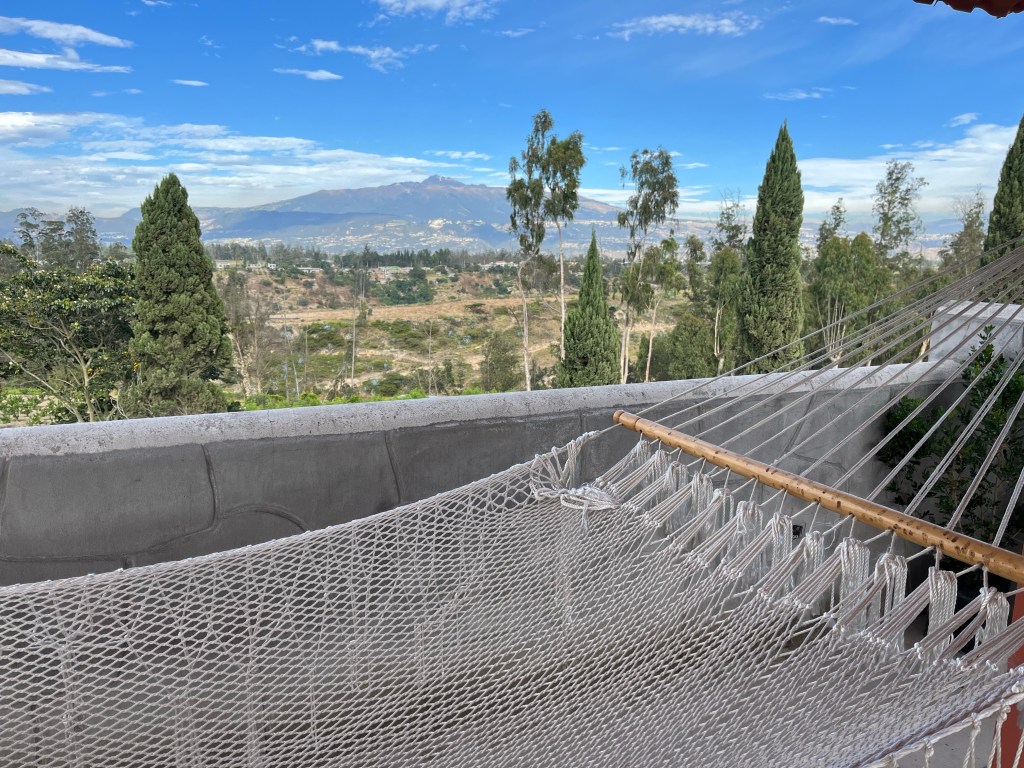
Not as rewarding as waking up to this view, but rewarding all the same.



 The Isms of the Ic