One of my favorite things about traveling is getting in below the surface level and experiencing the culture. For this reason, it has been amazing to know not only my beloved profe, but her entire family here in Ecuador.
I have experienced not only the Ecuadorian culture, but also the tourist culture, and the retired gringo culture. They are, of course, meshed within each other, but I have gotten a distinct experience of all three.
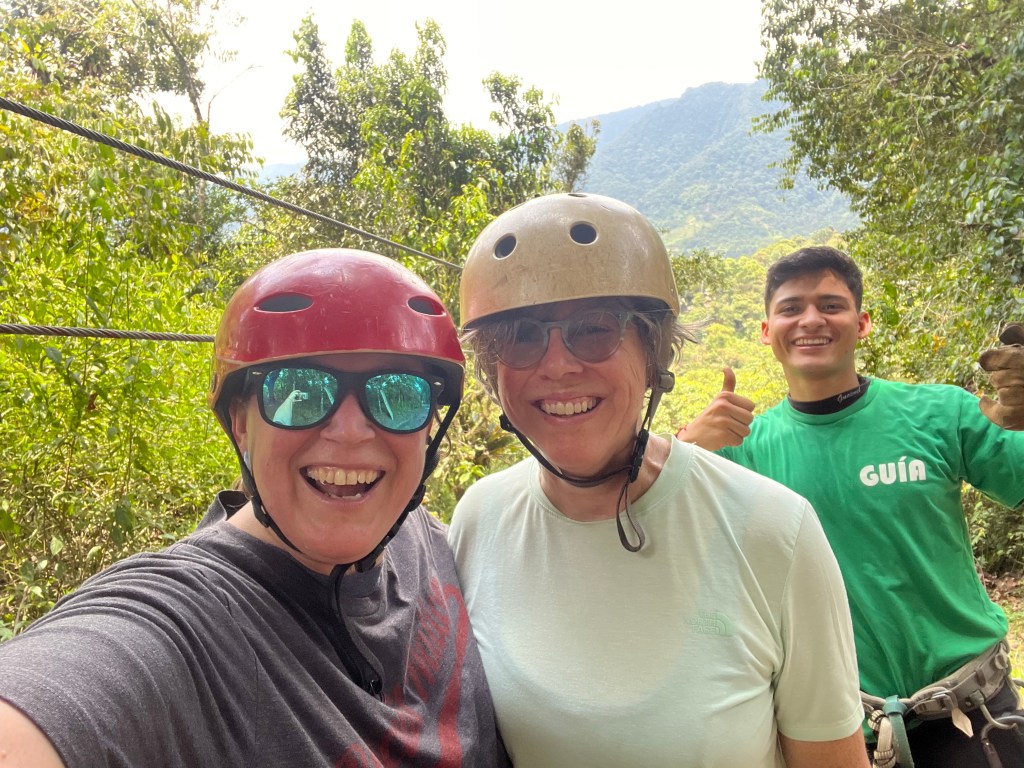
When my beloved and I are alone, especially when we are zip lining or wandering through the rain forest with a tour guide, we have gotten to experience how Ecuador, or Mindo specifically, treats it’s tourist. The people are so kind. They are light hearted and knowledgeable. I’m not sure if we have asked a single question that has gone unanswered. Many speak English, but if not, they are super patient with our Spanish. The prices are set; the currency is the American Dollar, and we have not been overcharged or had to “haggle” for anything.
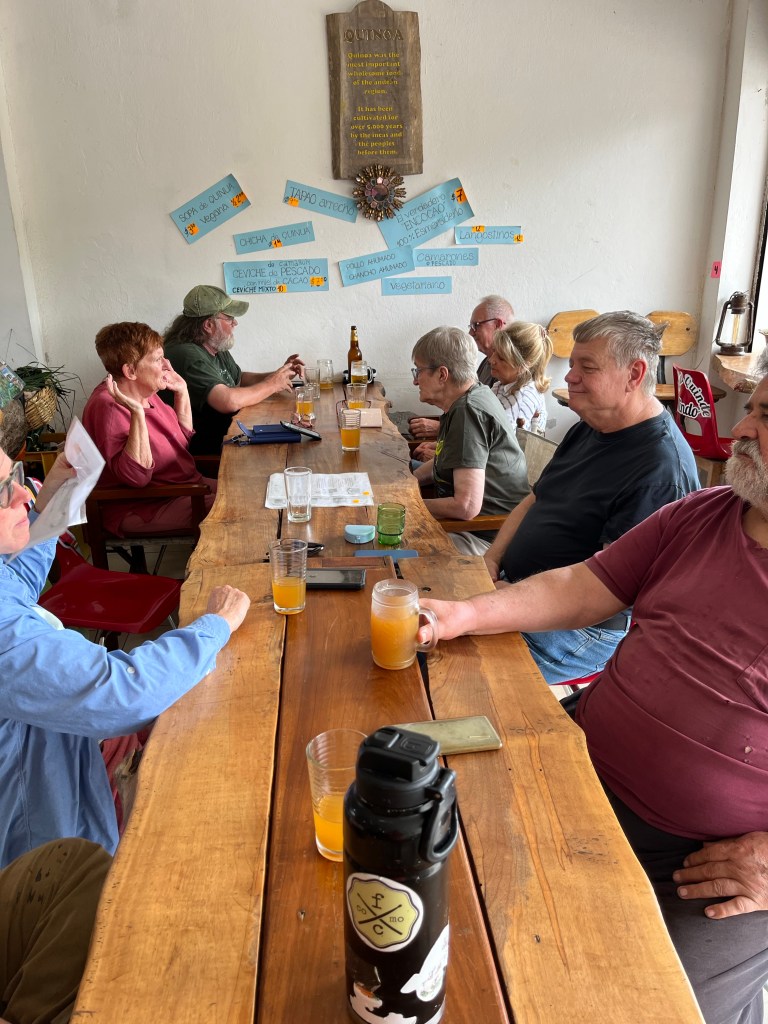
We have also experienced retired gringo life, some first hand, and some in stories from the over a dozen friends of Keri and Paul that we have met. Keri told us that the vendors here will raise prices for building materials and services for things like wood or working on their house. They told us that if their Ecuadorian daughter goes in first to set a price on something like building materials for their house, they are grated a better price than if they were to go in on their own.
White people are assumed to have more money than Ecuadorians. To a certain extent, this is true. The Ecuadorian minimum wage is $4.25/hr, so if you are traveling, depending on your budget of course, your money will go farther here, as a general rule. Most touristy things are not overpriced. We have spent $10-$20 per activity on touristy things: zip lining, night walks, coffee tour, etc.
Also, depending on how much you retired with, of course there could be a reserve that would go farther here than in the US. But once you move here and become part of the permanent community, it is my humble opinion that you should be granted the same prices as the Ecuadorians. You are living here, you are building and maintaining your home here. You are contributing to Ecuadorian work in many forms.
We have been invited to several of the retired gringo lunches and activities. They definitely live a different life than the average Ecuadorian. They are the owners of several of the establishments, hotels, restaurants, even some of the tourist attractions. We have been to some of the nicest restaurants in town on account of the retired gringos. If you are white, no matter where you retired from, you are considered a gringo. It’s possible that this is a self-named title. I am not certain.
One particular gentleman that we met is Eric, here living and making his living because of “all things creepy and crawly” according to his website and tourist attractions. He is a guide and has built a business on the reptiles, amphibians, and arachnids that many of whom, only existing in the climate and location on the earth. The biodiversity here is second to none. We took his night walk tour and it was fascinating. His employees are bilingual and very knowledgeable about many many things in the rainforest. The tours are on his own land up in the mountains near Mindo where he also lives. It was beautiful. He is a conservationist, a scientist, and an Ecuadorian, but he is also a gringo. I personally felt super grateful to have met him. He is a super nice guy who is fascinated with anything that moves in Ecuador.

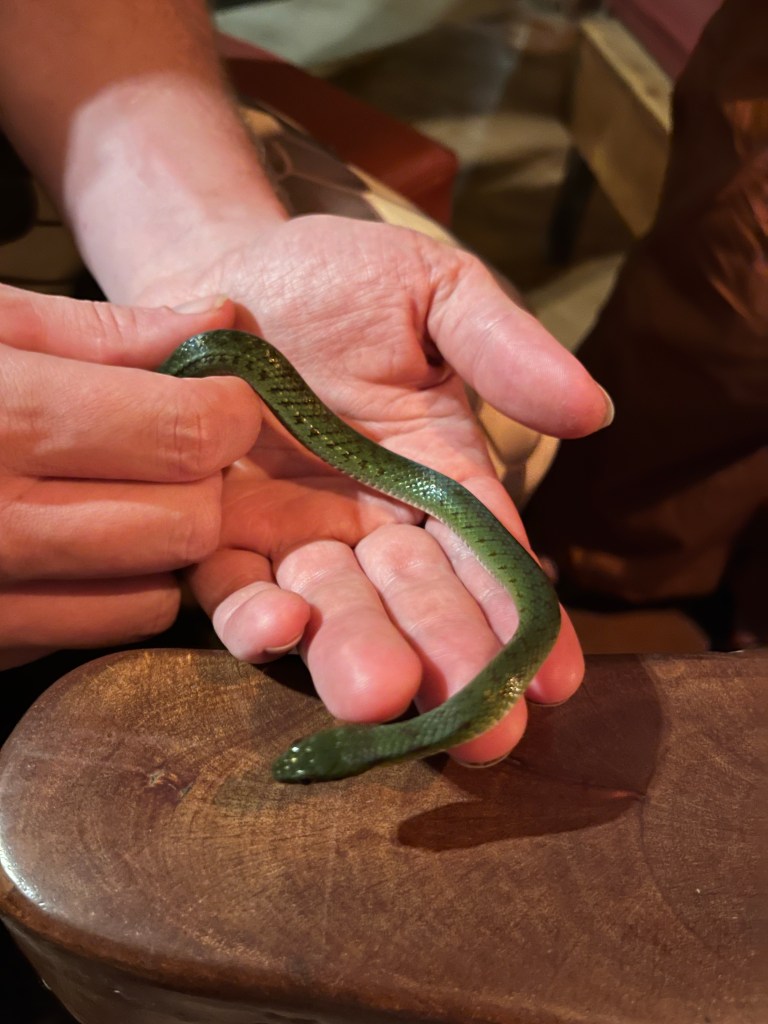
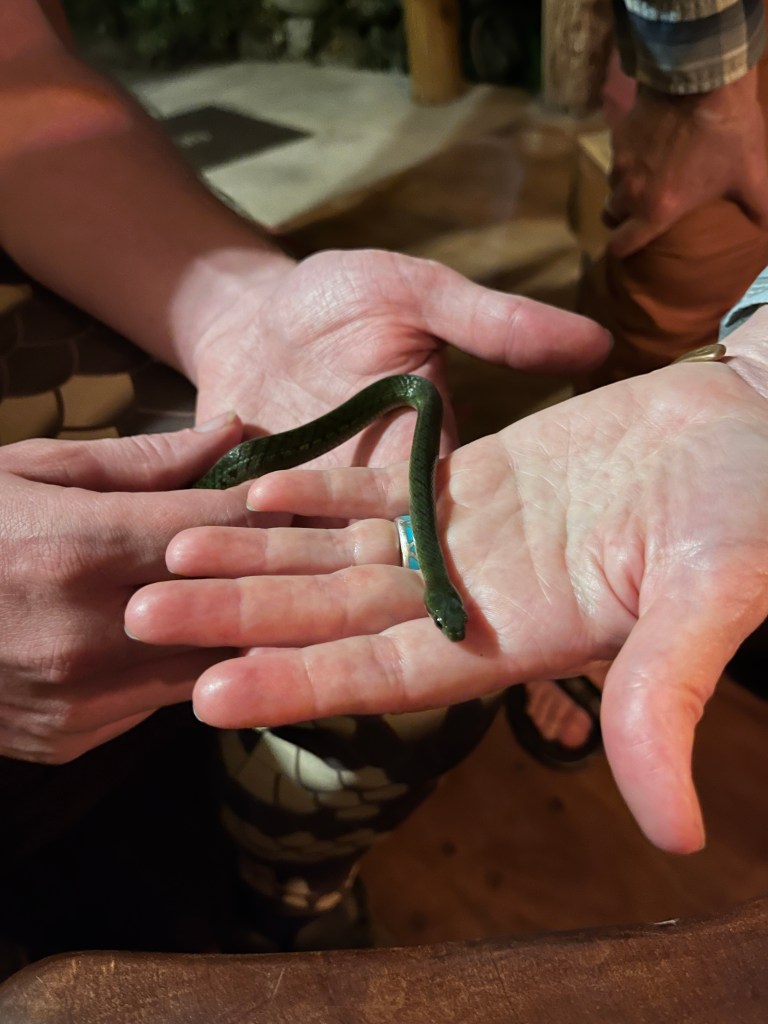
The night we met him, we had been invited to a fondue party at another expat’s house and restaurant, Di Di, the Frenchman. Eric had a snake in his bag that we all got to hold and play with. He had found it on his way. Angela asked him how many snakes he owned and he quietly shrugged and said, “It’s hard to say, because I picked this one up on the way here.”
Because Keri is such an a awesome tour guide herself, we have learned about many of the typical Mindo experiences, road construction, customs, and gossip. My reference point has been good ole Ellsworth, Kansas. Mindo is about the same size as Ellsworth. This has helped me exponentially. There are many things that they have to “go to the city” to get. There are no big grocery stores here. No Home Depot. No Cosco. Quito is the nearest city and it is two and a half hours by car. I’m sure further by bus, but there are busses that go there. One could exist here without a car, but a car is handy.
This is a single Catholic Church in town. It is small and quaint. I have seen one other church. While we haven’t walked every street, we have been down many and have walked everywhere in town.
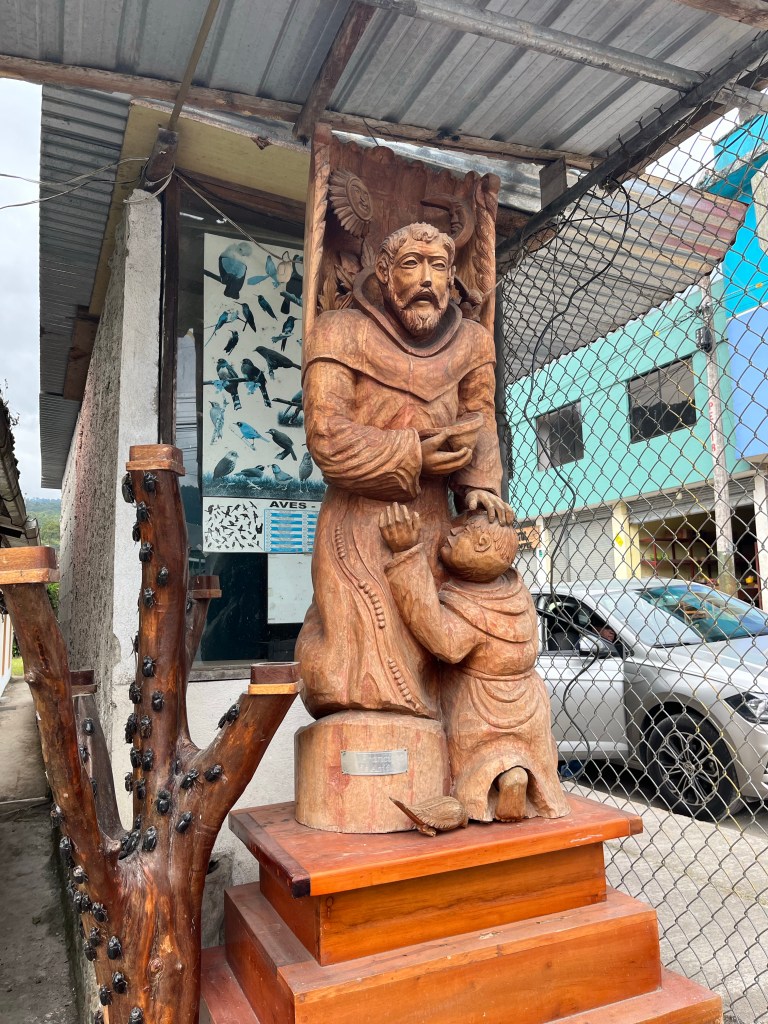
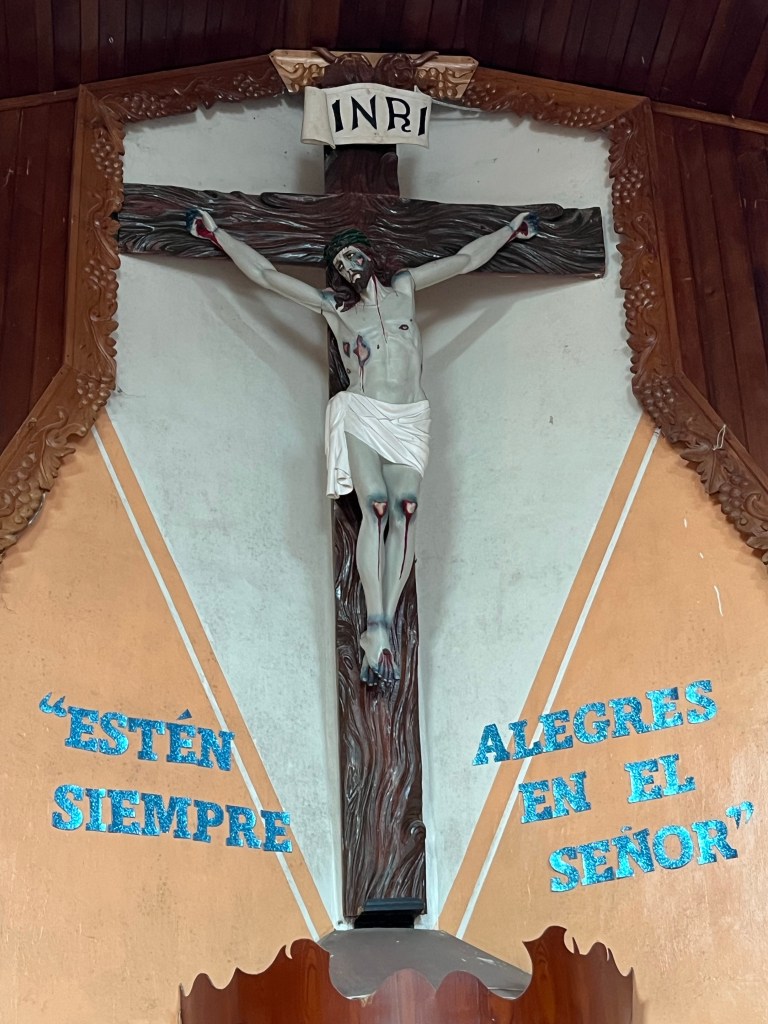

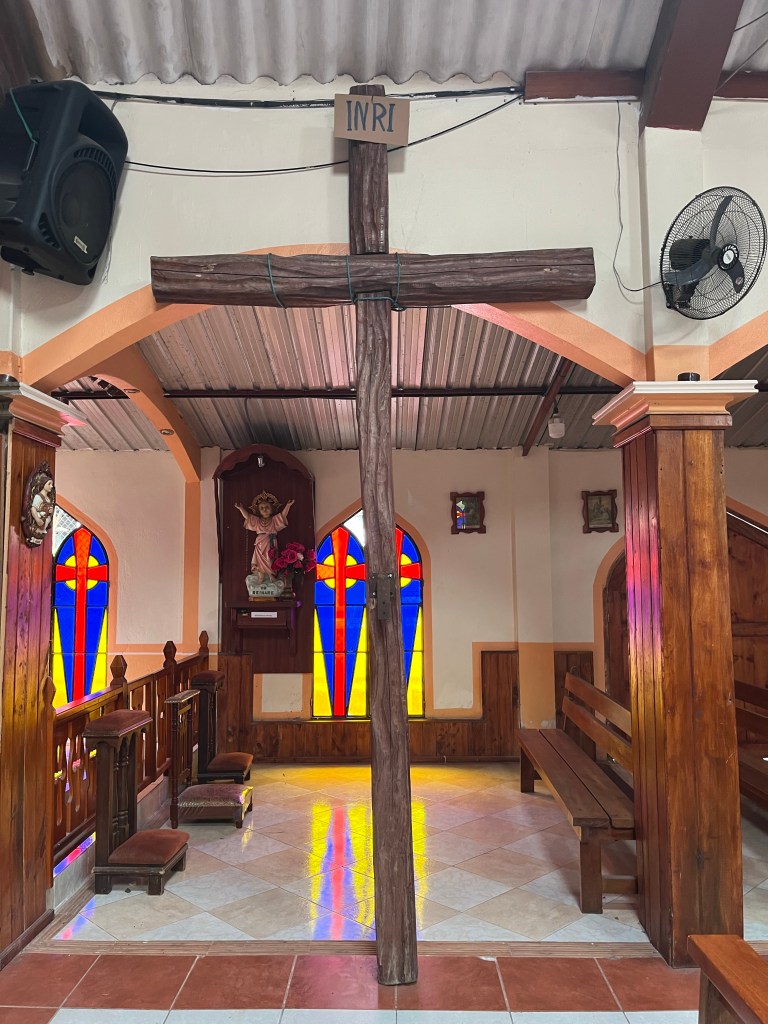
We have bought food off the street from street vendors: cookies and fresh fruit. There are vendors that have carts that can be pushed, hooked to bicycles, some even motorized. There are also trucks that drive around the streets selling fruit or bottled water. The water here is used for washing dishes, showering, etc, but not drinking or preparing food unless boiled.
There are no closed doors in Mindo. By that I mean that everything is open space. Many homes do no have windows and all store fronts are open air. There is no winter here although it’s kinda chilly in the morning. As I write this, I am in track pants and a sweatshirt. Everything is damp.
The main street is lined with shops that are also open air. Several of the grills for the restaurants are located on the street in front of the stores. I think most of the stores have pull doors that close over them at night, like in a mall, but I have not been awake late enough or early enough to see this for myself.
If you can afford to do so, the best home designs are built off the ground. Some are just a few feet off the ground and others have their first floor as their garages. It is naturally dryer in town than in the country and especially in the cloud forest. The hotel where we are staying, Hotel de Libertad, has it’s first floor made from cement and holds the laundry room, the pool, and facilities for the pool like showers and restrooms. Bikes, motorcycles, and cars can be stored here as well for guests or residents.
The wood starts with the stairs leading to the second floor with reception and several rooms. There are three or four separate stairs that have rooms, and the final one is the kitchen and dining area. There are no screens on the windows. The gathering areas in reception, my morning sitting space, and the kitchen, are all open air. No windows.
Let’s see, what else? Because many people do not have cars, there are taxis readily available even though the town is the size of Ellsworth. Taxis will take you to any tourist attraction in the mountains, and even the airport or the coast. I would assume they would also take you to Quito for your big city needs, but a bus would be much cheaper.
Tourists, gringos, and locals. Not bad. Three cultures for the price of one. Thank you Keri, Paul, Grace, Estepha, Leo, Wendy, Jeremy, los gringos, y la gente de Ecuador.

 The Isms of the Ic