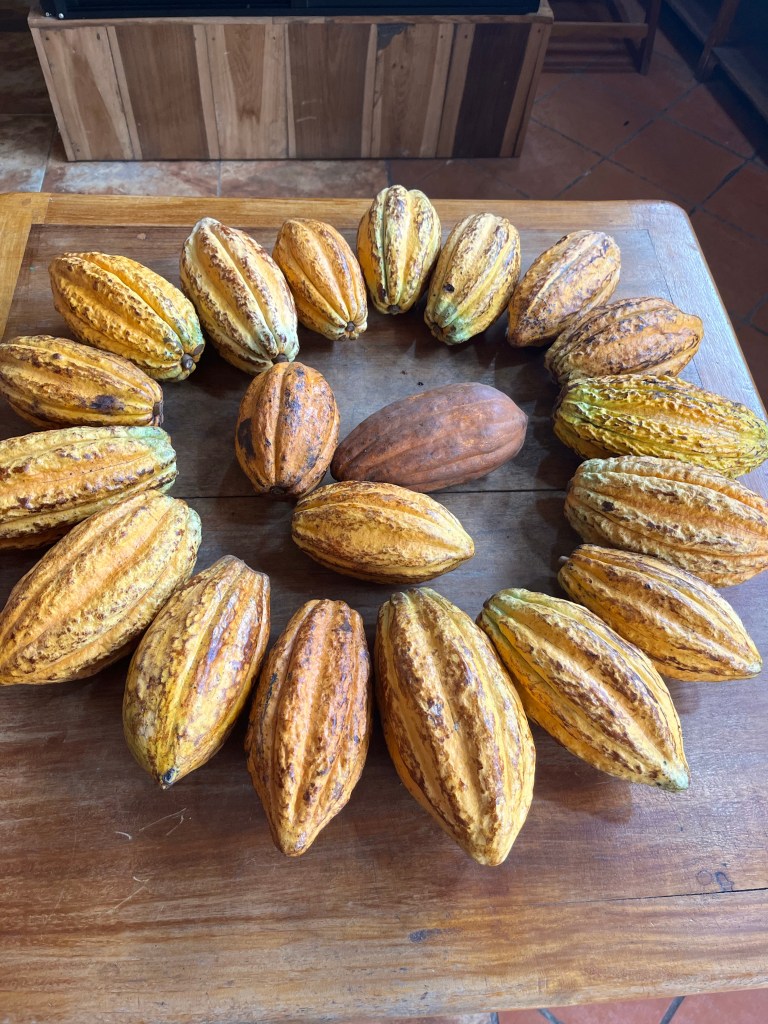
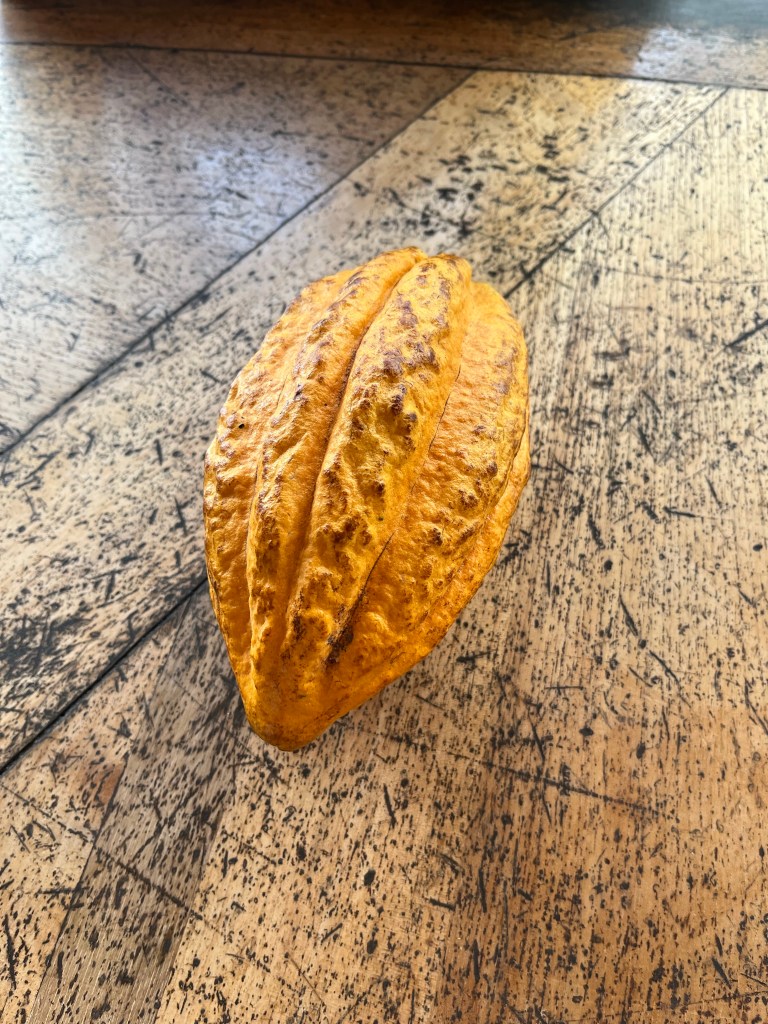
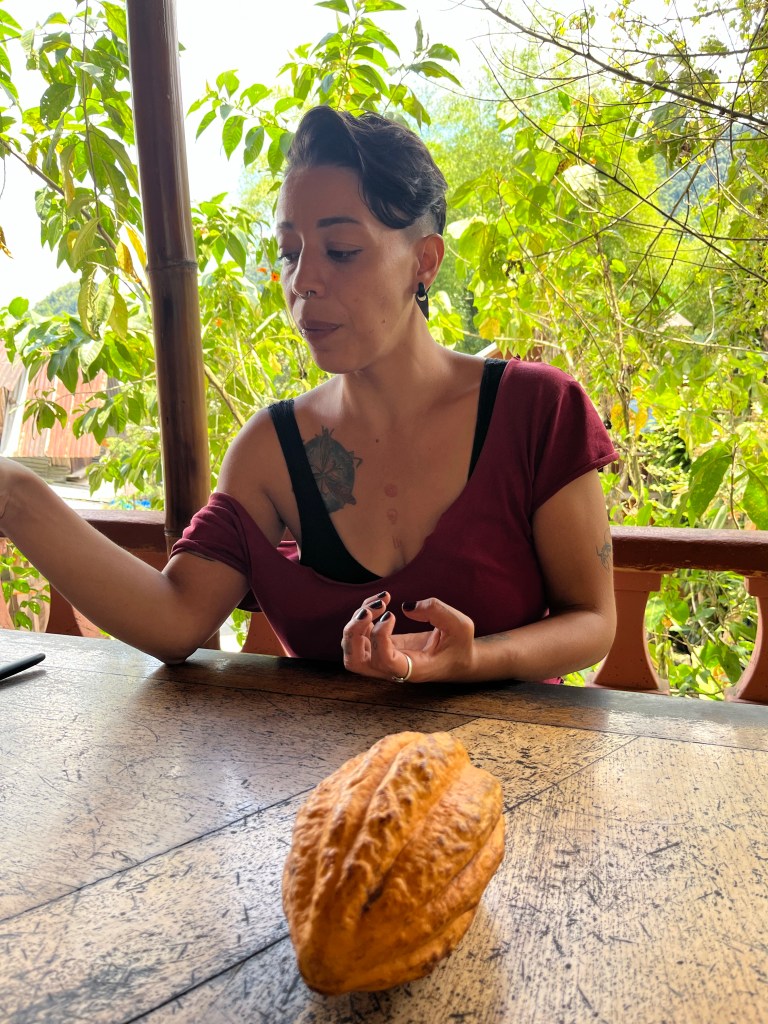
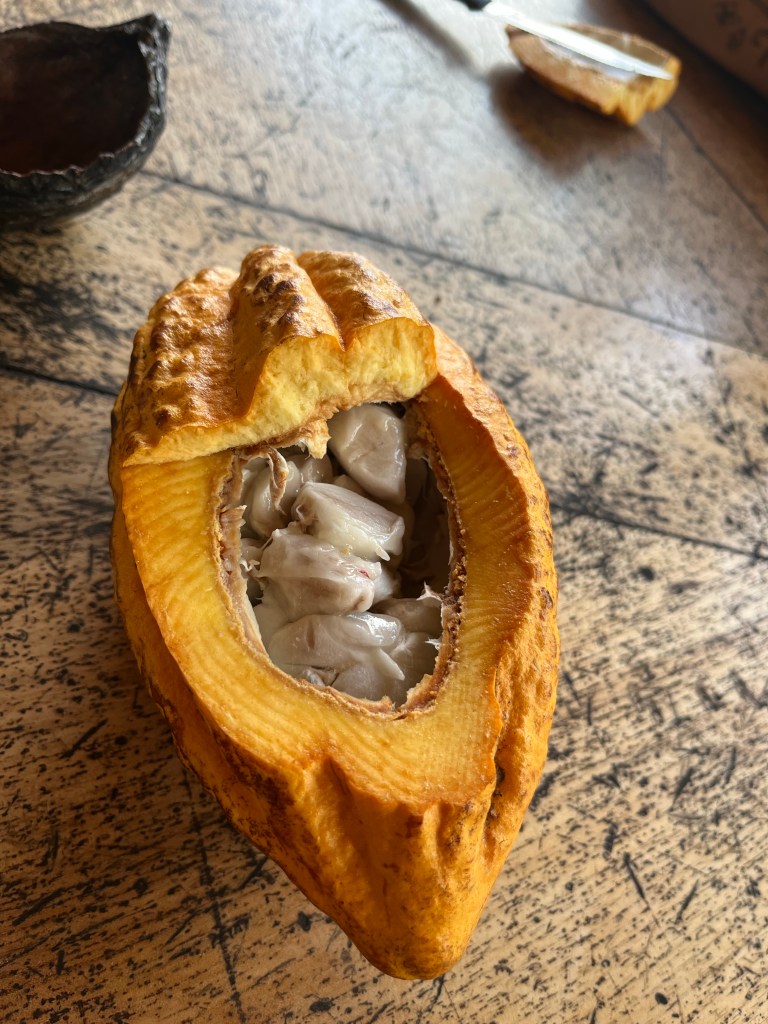
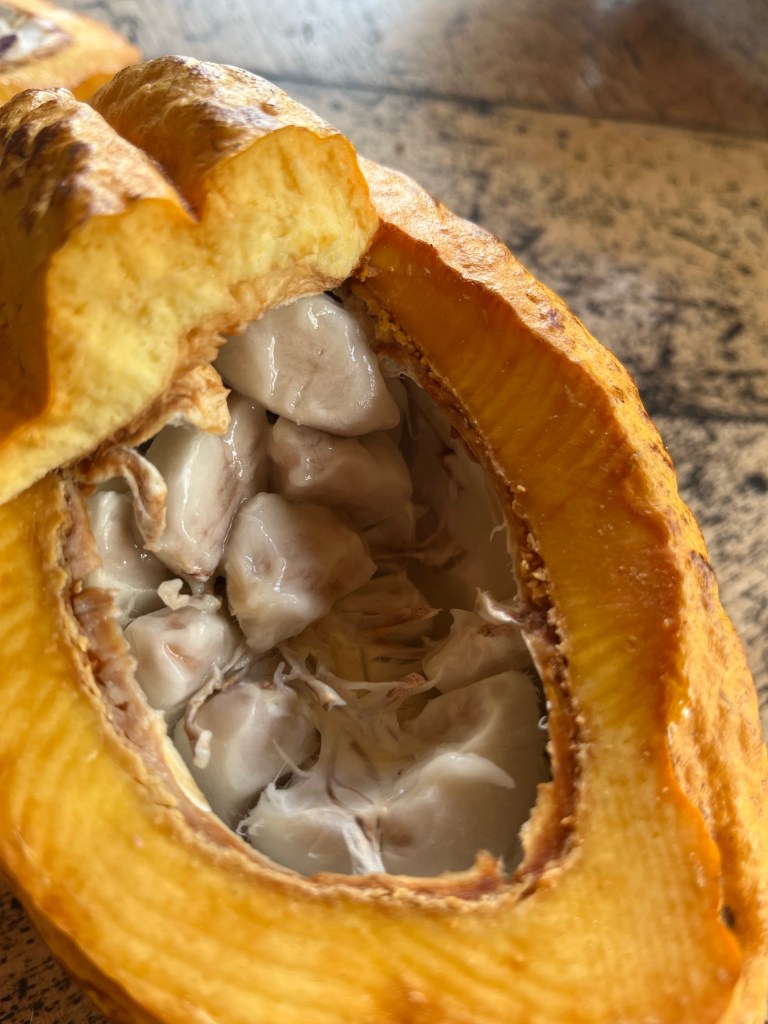
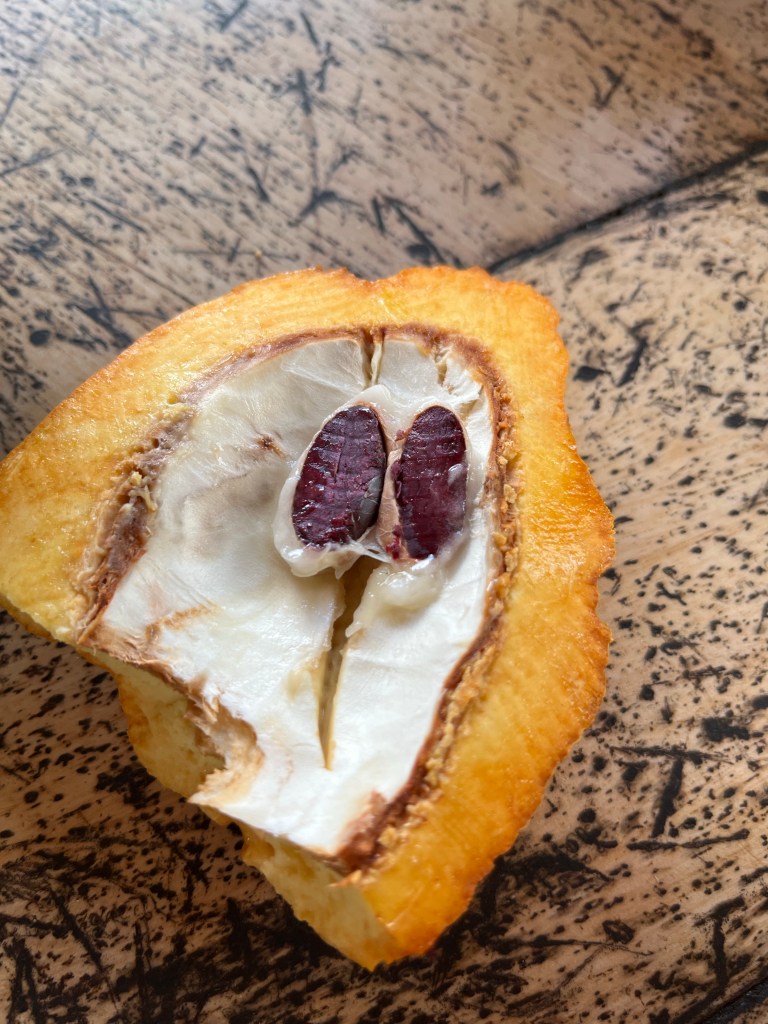
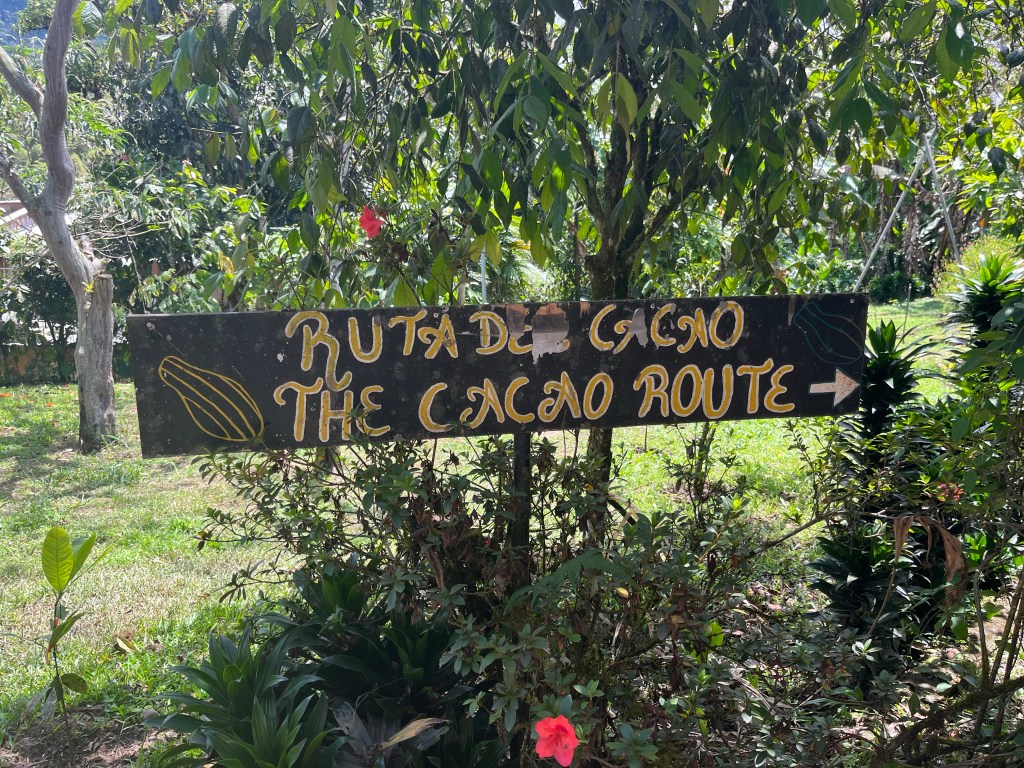
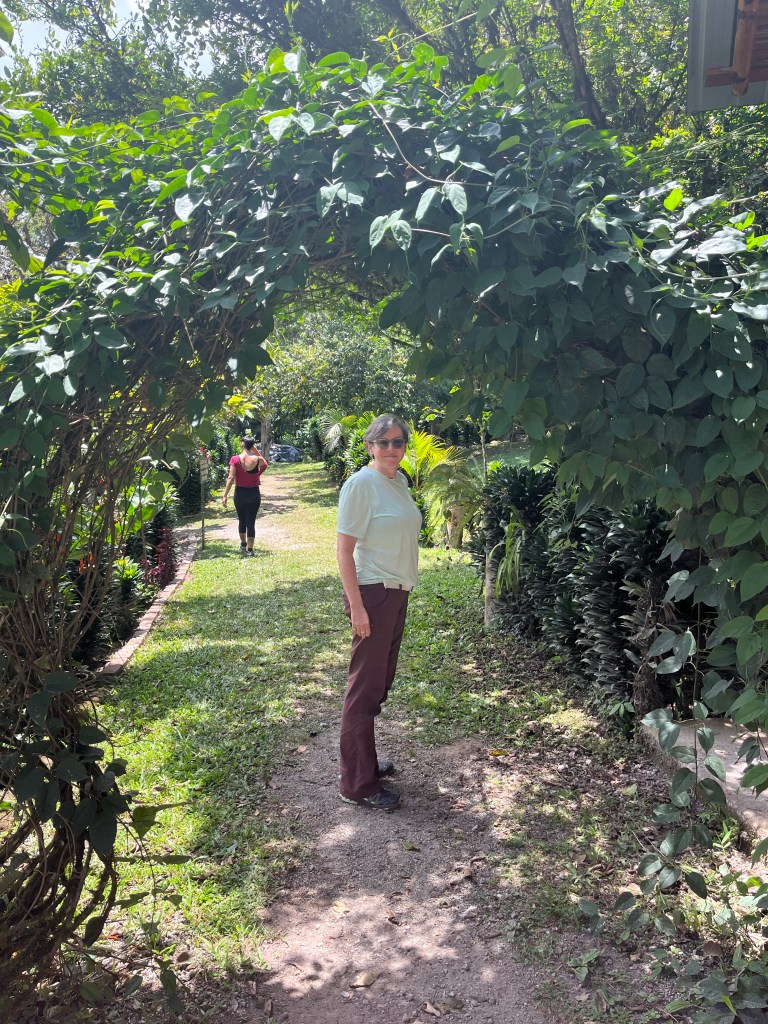
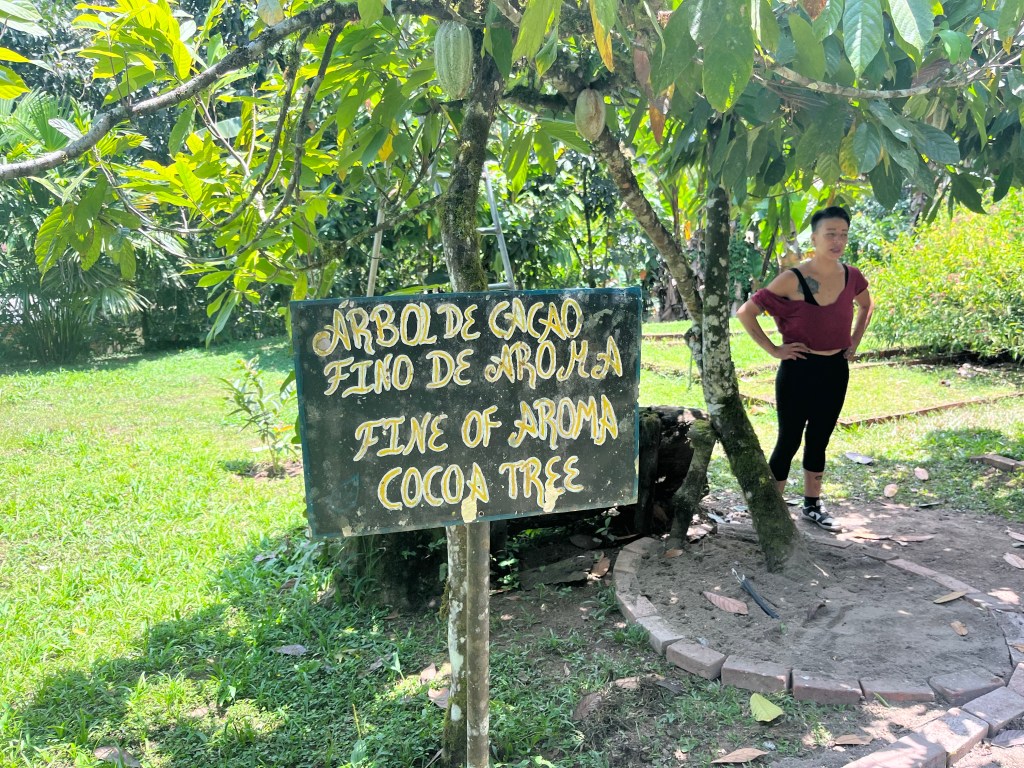
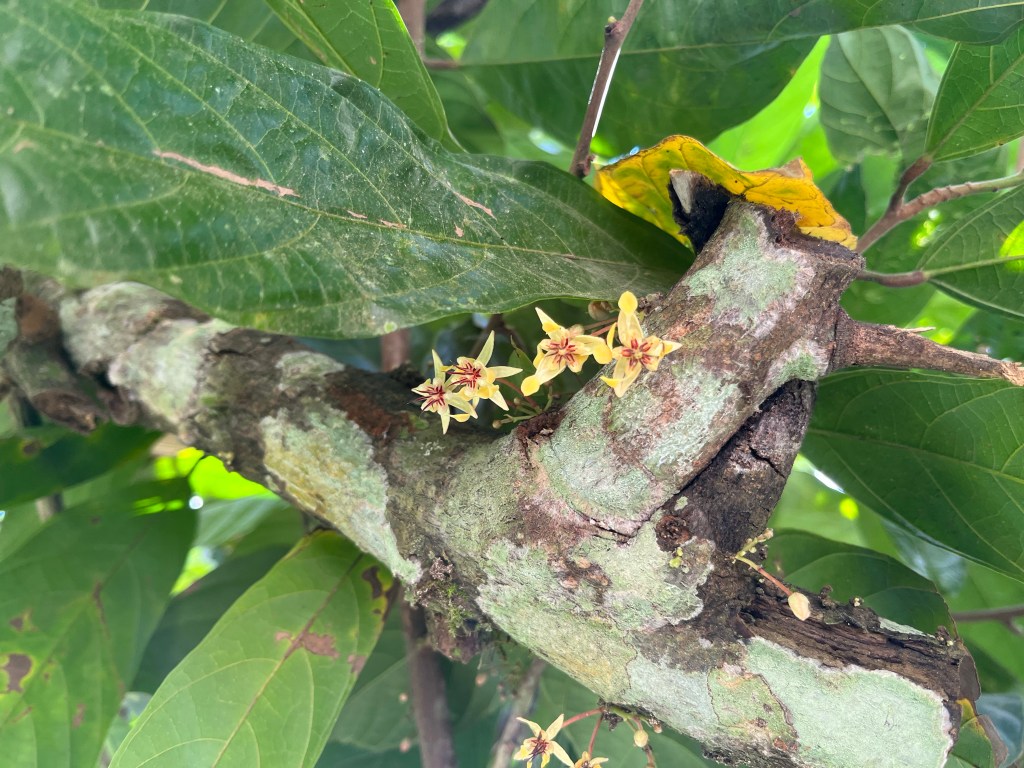
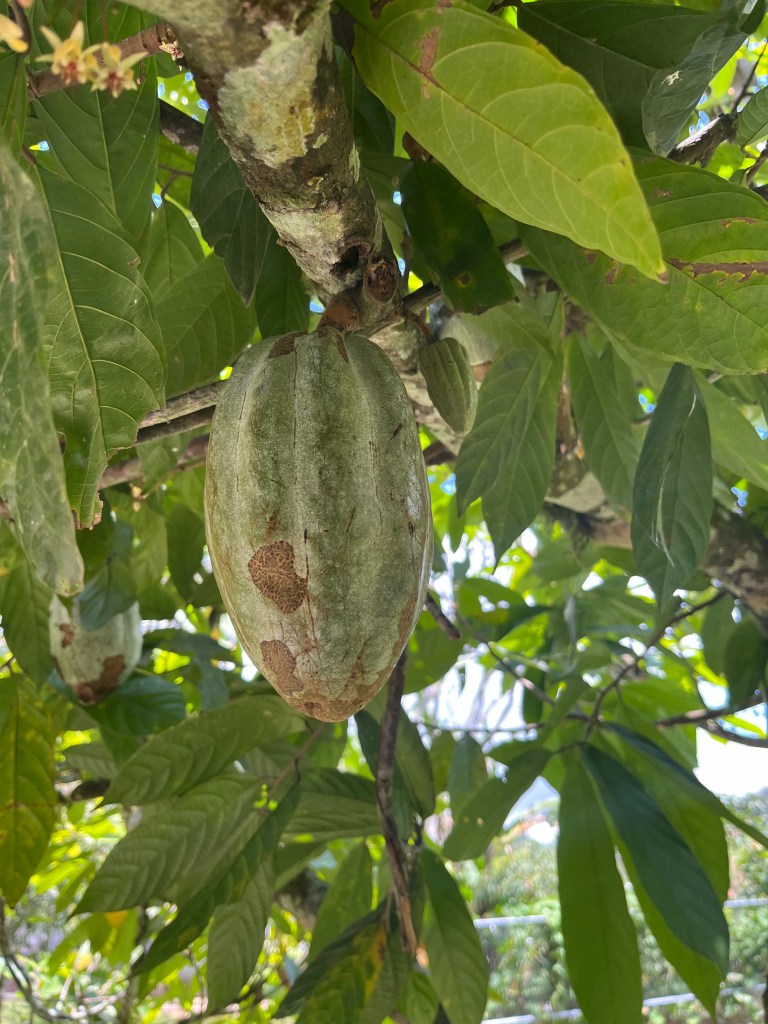
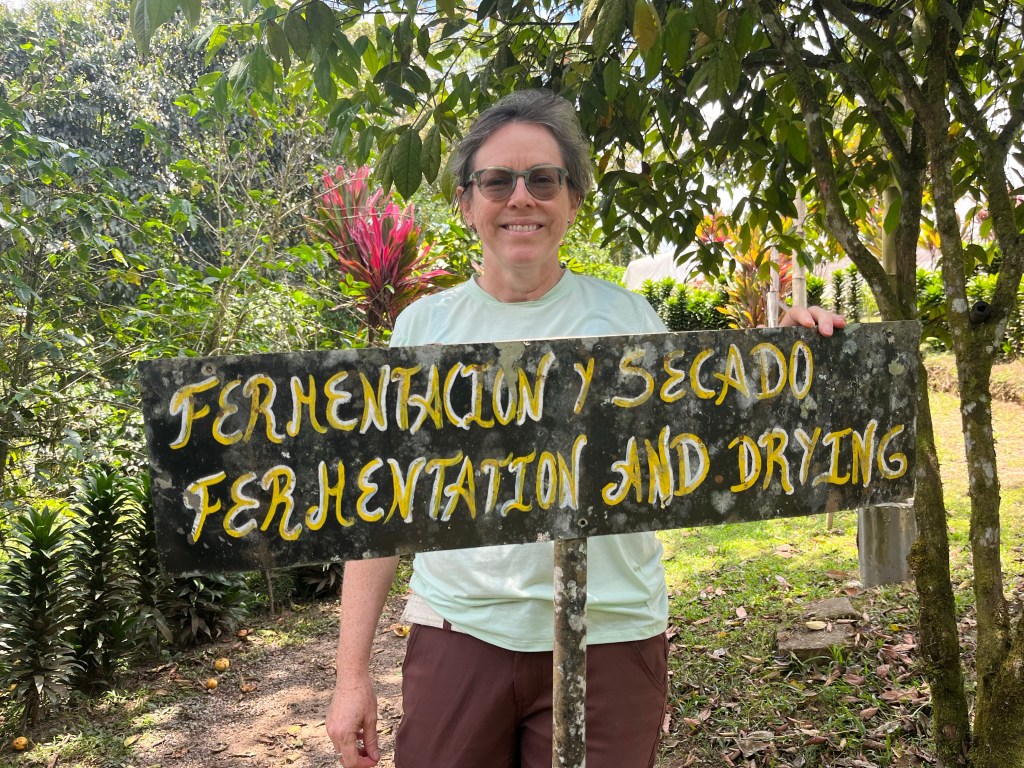
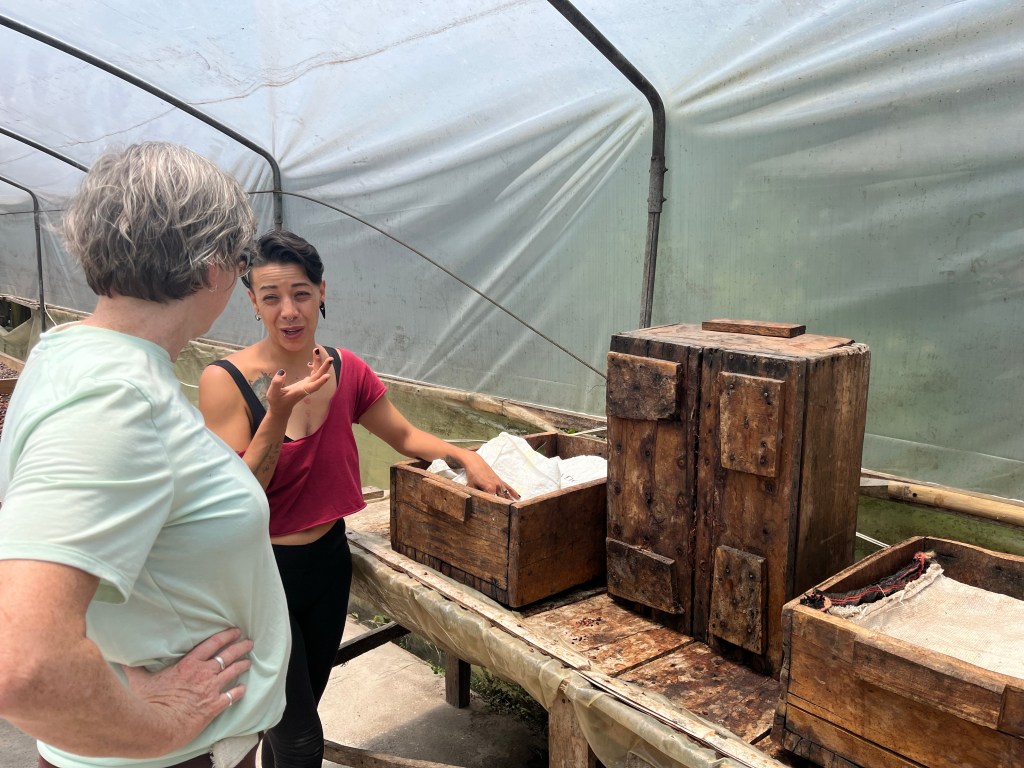
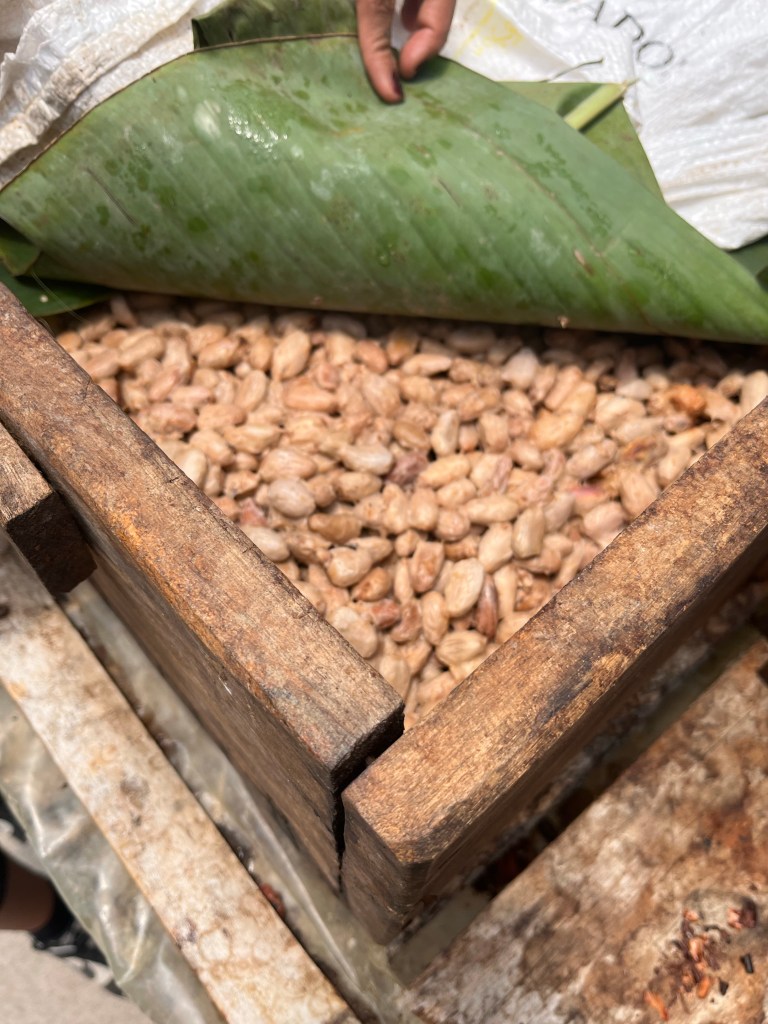
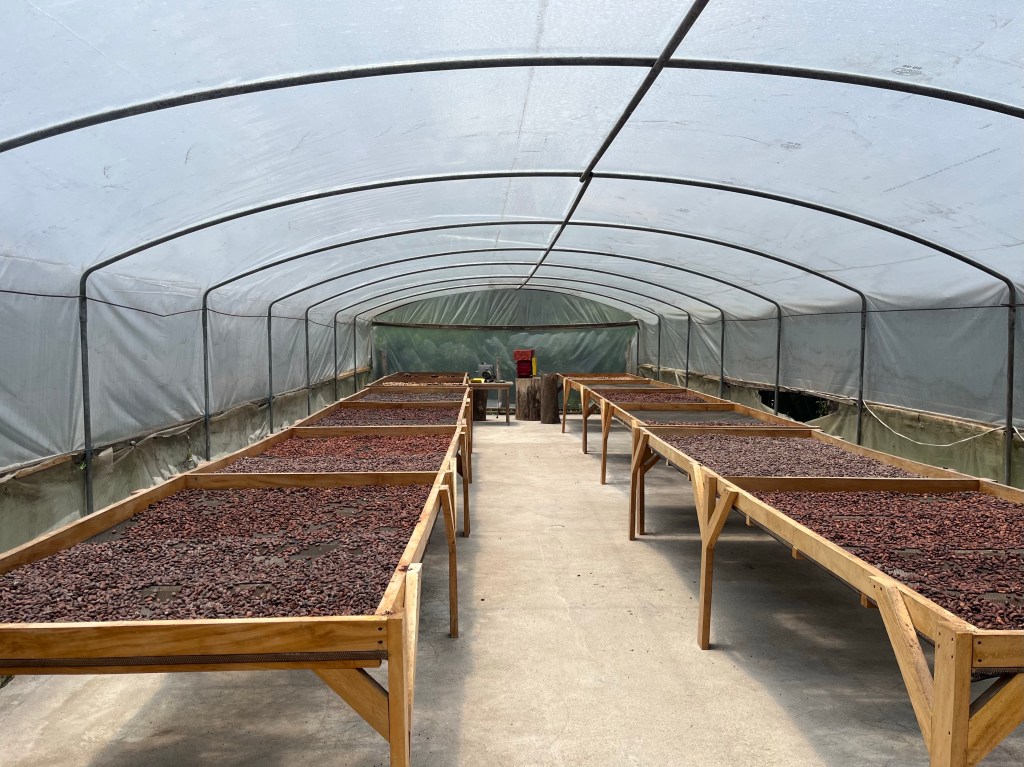
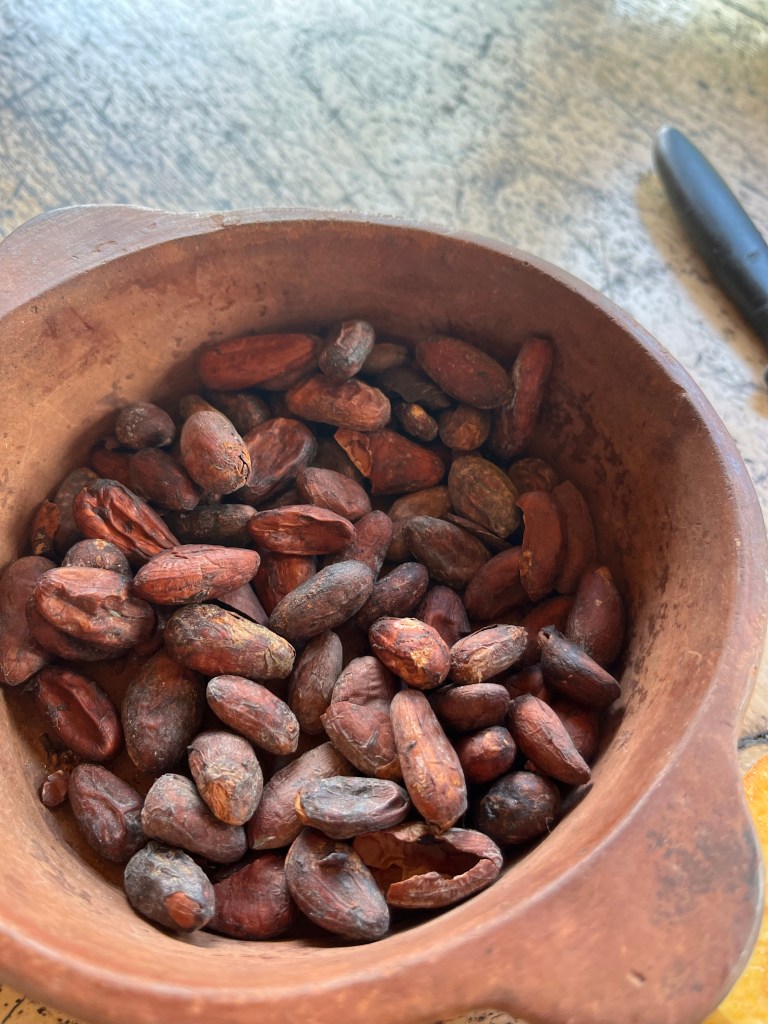
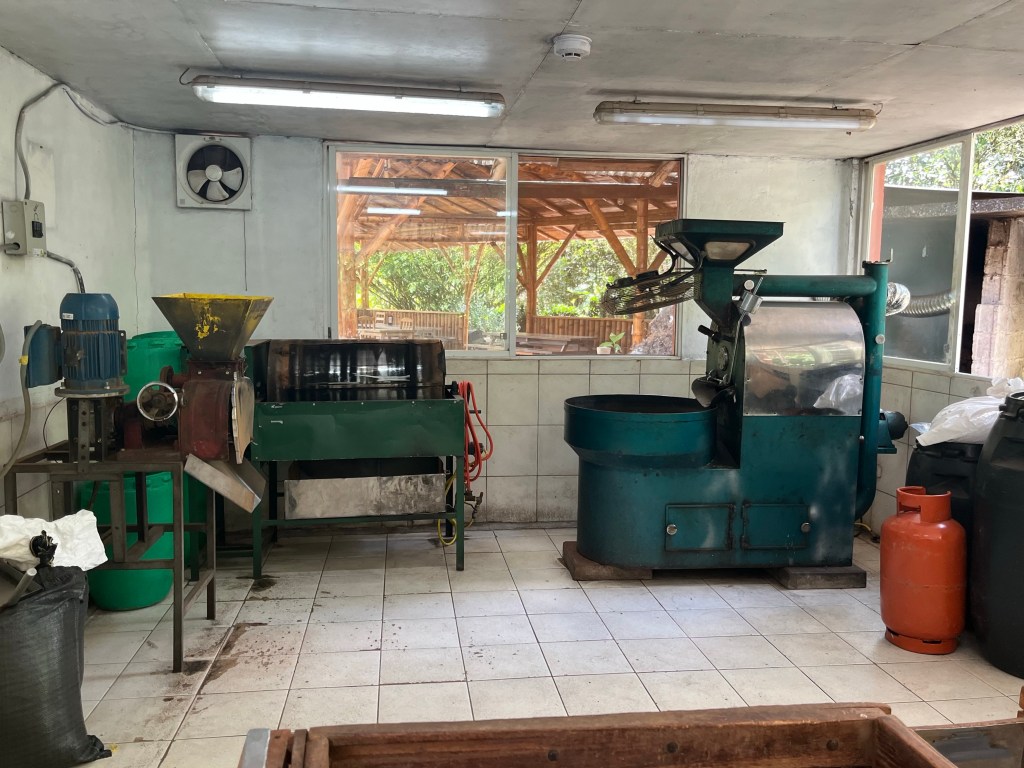
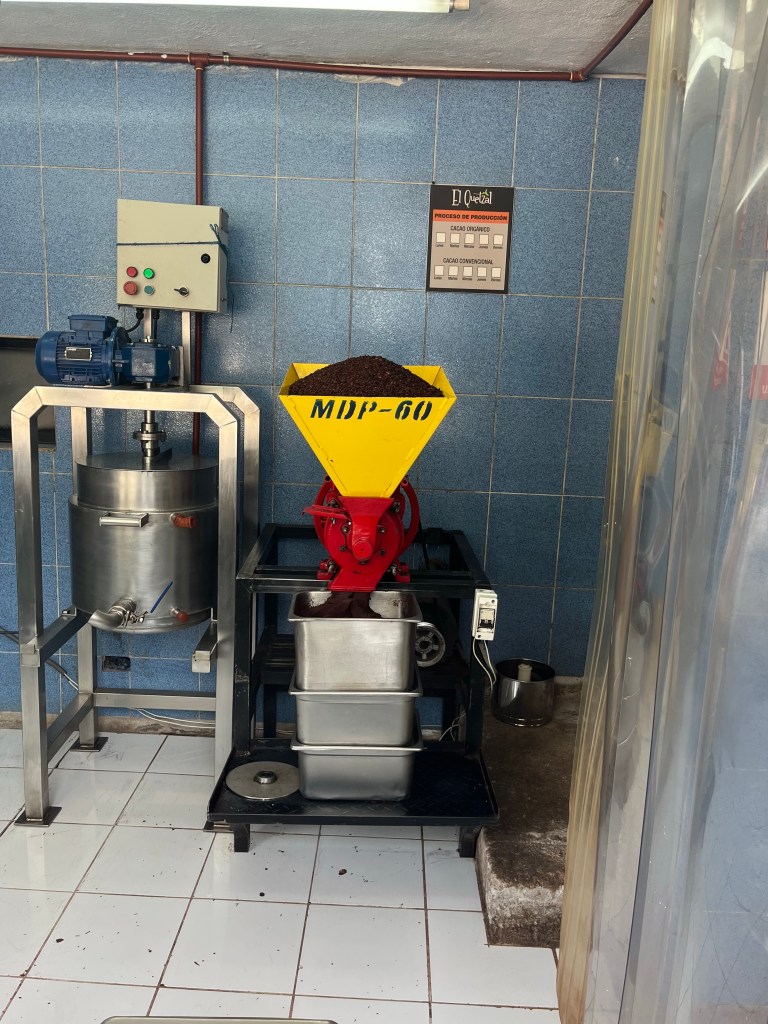
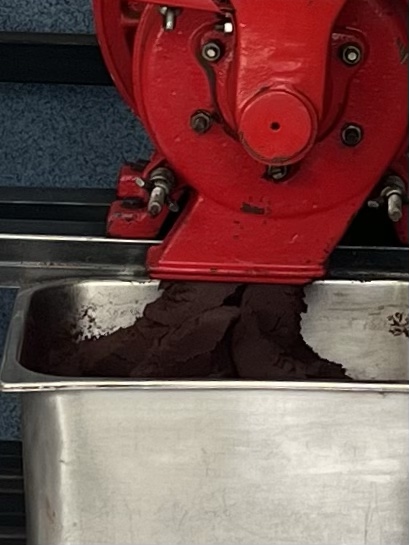
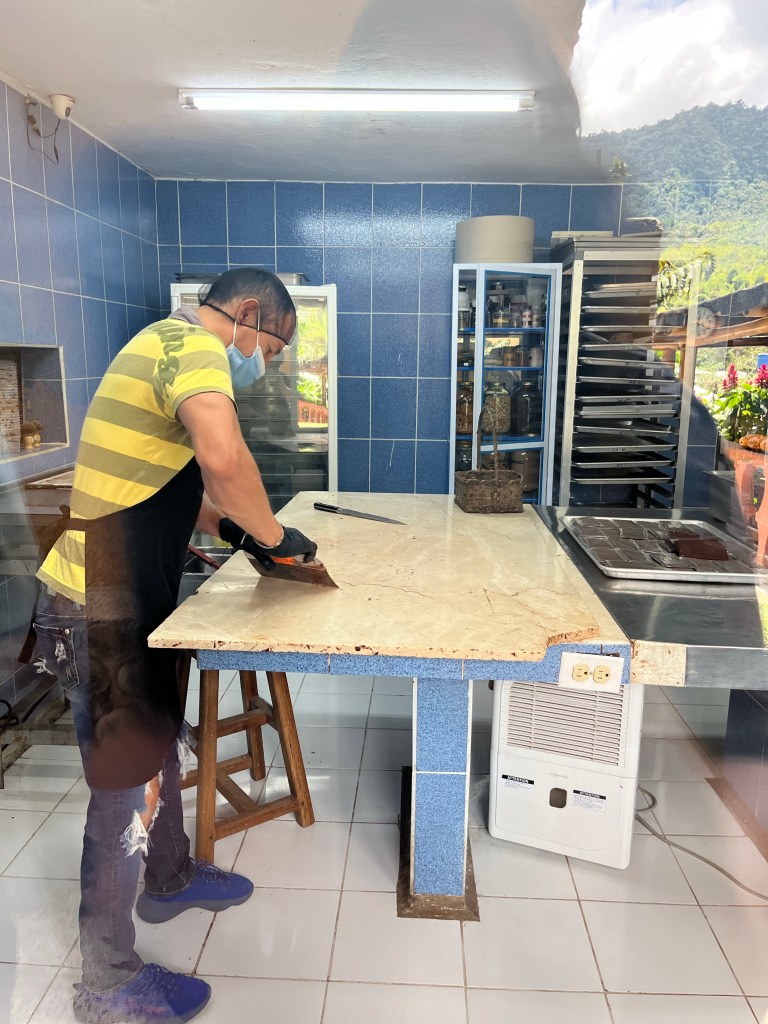
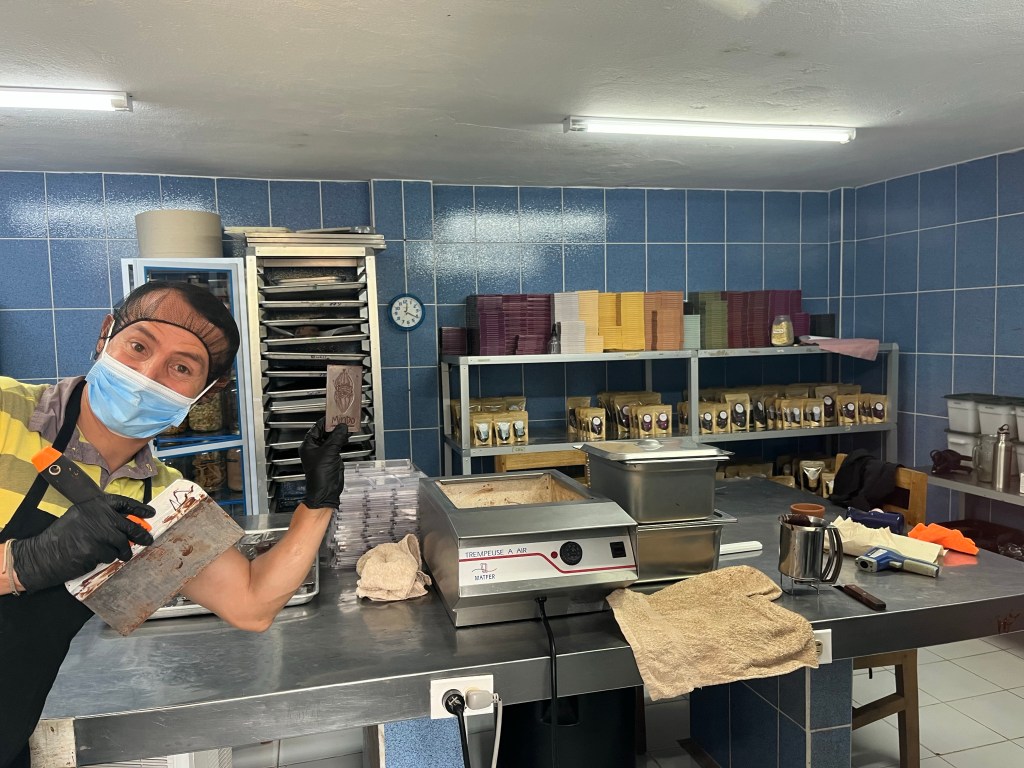
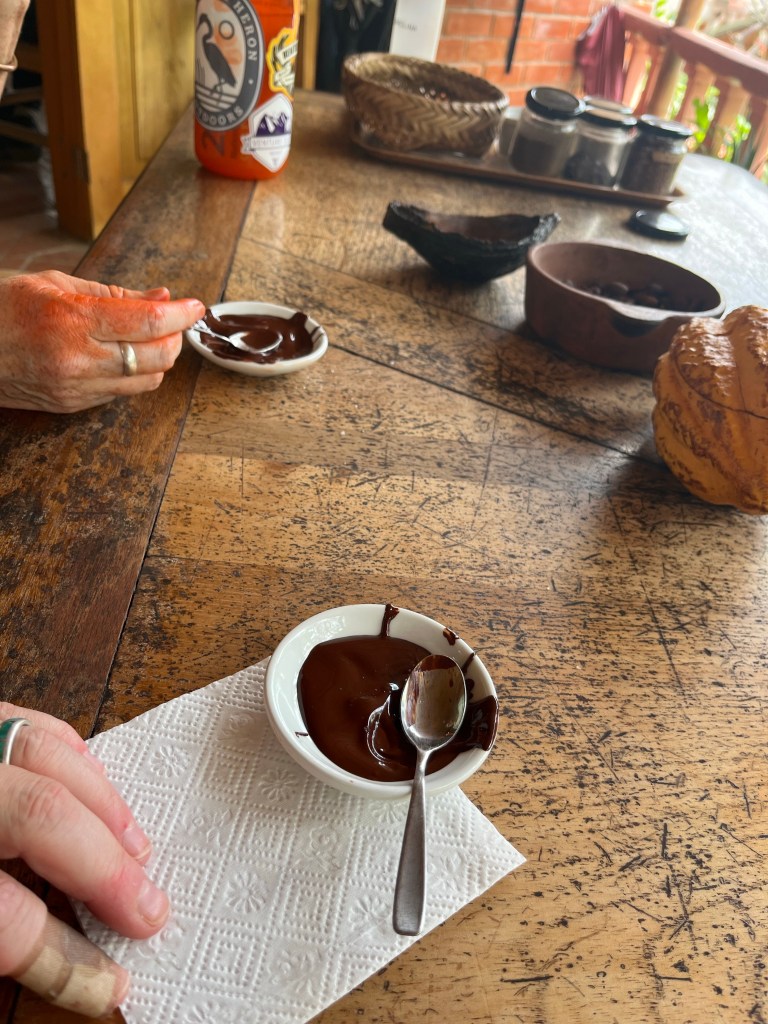
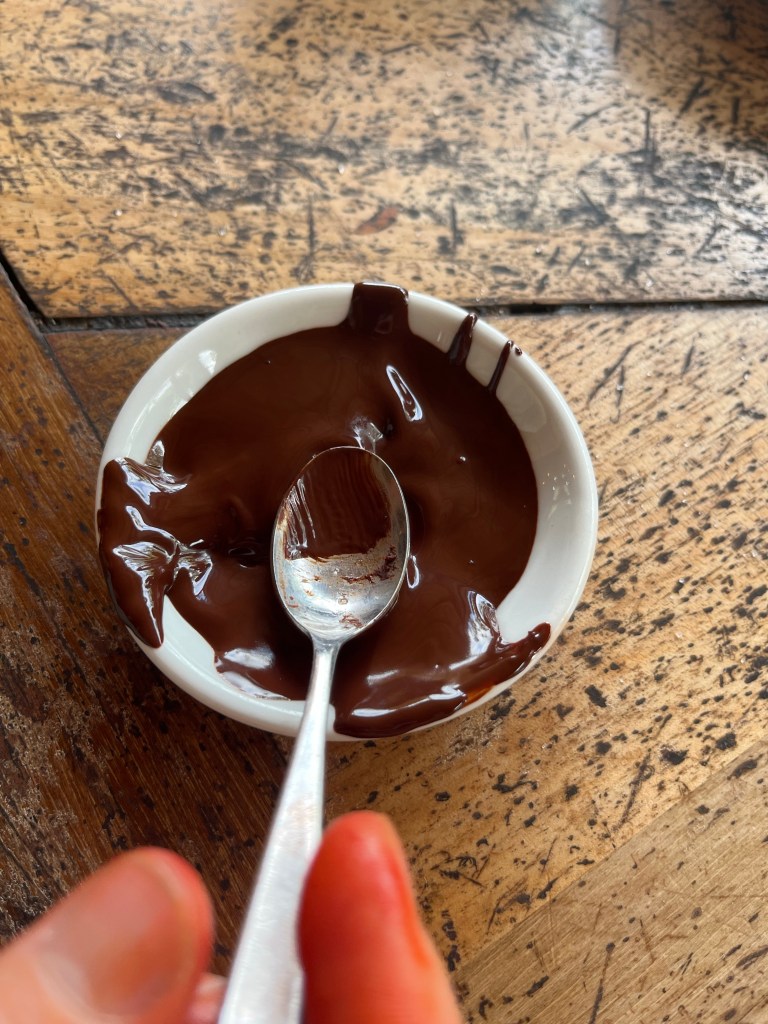
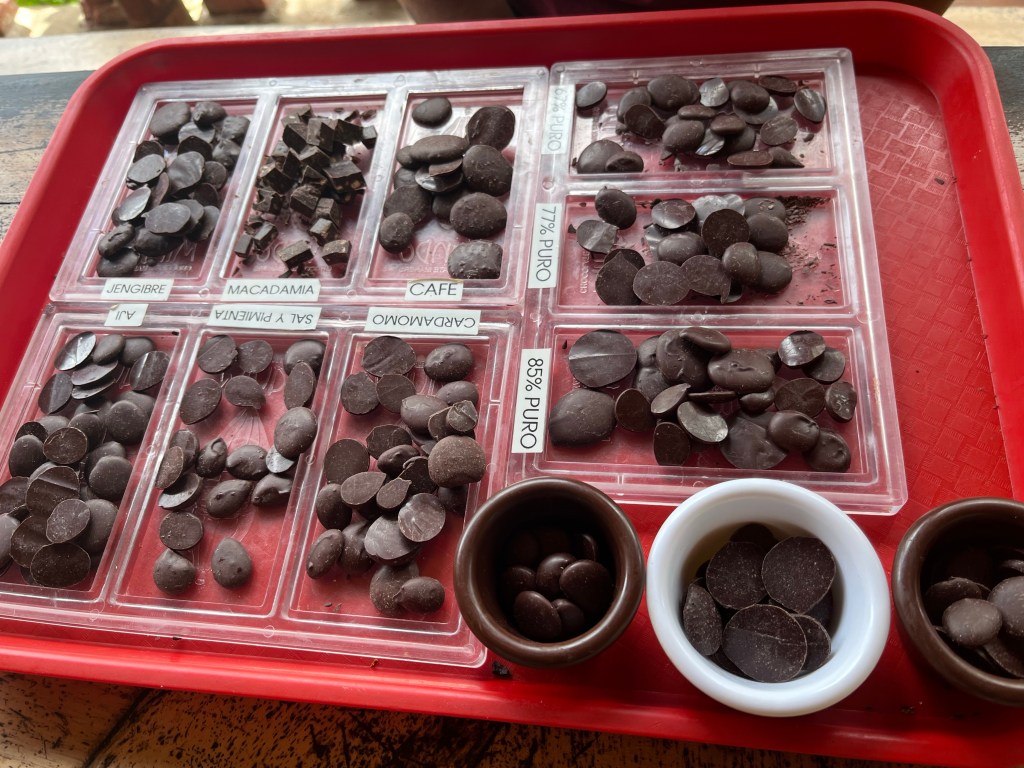
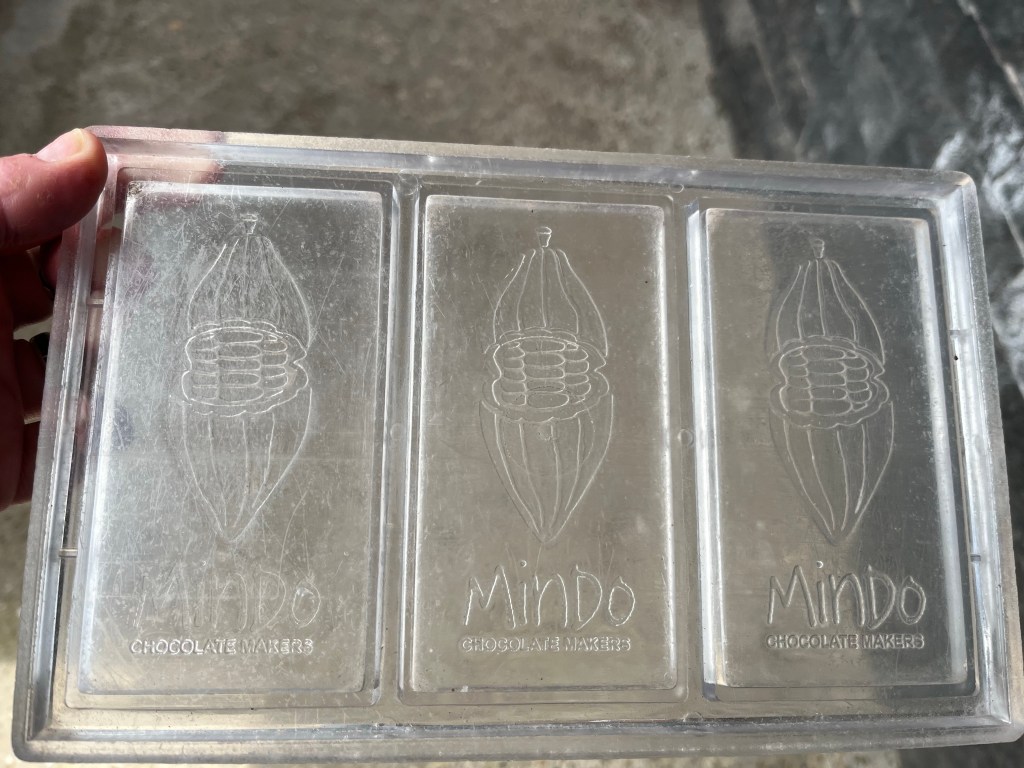
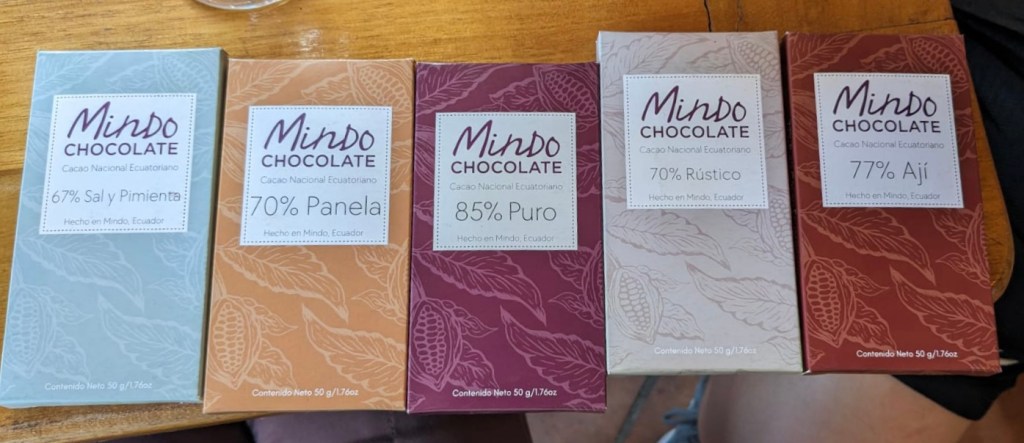
These are the fruit or the pods of the Cocao tree.This is the single fruit we worked with.This is Carolína, our guide. Carolína cut the fruit without cutting into any of the seeds. She said that if you cut into any of the seeds, you release bacteria into the entire fruit and none of the seeds would be useful for chocolate. Close up of the inside of the fruit with the cocao seeds. The fleshy part of the seed is had an awesome sweet tart taste. We each got to suck on several. The texture was wet and cool. The pure cacao seed cut in half. That is the most raw version of cocao. If you were to bite into the cocao at this stage, it is super bitter and raw, kind of like a peanut or a coffee bean. Carolína said that it would suck the moisture out of your mouth. It is worth stating that there is no sugar in cacao. We add that as humans. It’s quite bitter in it’s natural state. I am personally not a fan. I like my Hershey’s with all the milk and sugar that they can cram in to it. Cacao in it’s natural state is nothing like a Hershey’s bar. Headed out to see the Cacao trees. This picture shows the Nacional Cacao tree. It grows about three feet and then splits off. It does not start producing fruit until it is three years old. The seeds take on the flavor of nearby plants. For example, if you plant vanilla close to a cacao tree, you will have a hint of vanilla in your cacao seeds. Although you cannot see the base of this tree, this is the hybrid called CCN51. It was developed in the 1970’s but did not become popular until the 1990’s. This tree produces fruit in two years. It also produces twice as many fruits to be harvested. The down side is that it does not have as much flavor or variety of flavor from seed to seed. The farmers and producers of chocolate like it, however, for obvious reasons. This is the flower that turns into those huge fruits. The flower is pollinated by mosquitoes. It’s super tiny compared to the giant fruit that comes from it. Notice the tiny flowers in the top left corner of this picture compared to the fruit in the center of the picture. These are the fermentation boxes. They ferment the seeds for two weeks flipping the boxes every 24 hours. The fermented liquid drains out of the boxes and is caught in containers below for booze de cacao. Nothing is wasted. It was hot as shit in this greenhouse. Easily 20° hotter than the temperature outside. The moisture is kept in the boxes with banana leaves. The boxes must be carefully maintained as well since the seed could still take on any flavor they come in contact with. The drying process. This was in the same greenhouse as the fermentation process. Dried cacao beans that have not been shelled. We tasted five different cacao beans and each had a slightly different flavor. Here the shells of the seeds are removed after drying. They use the shells of the seeds for cacao tea. Again, nothing goes to waste. This machine takes the seeds and turns them into a thick paste. Here is a close up of the gritty paste. 100% pure cocao which contains the cacao oil. Then the paste is put into this machine that grinds in stone on stone at over 100 degrees. I can’t remember how long they did this. Here she stated that the shiny color starts to come out so you know if it is good chocolate or not. She also stated that these two types of trees do not produce bad chocolate. The chocolate is them moved to a cold room which is 70 degrees. The chocolate is poured into molds or drops and sold as bars or bags of drops. 100% cacao does not melt like milk chocolate. For example, the “cold room” and the loco chico are at 70°. 100% melted cacao. When we tasted this, it is bitter and sucks the moisture right out of your mouth. Your whole mouth becomes void of moisture and you have to lick the roof of your mouth and lips to re-moisturize. It was rough on this milk chocolate lover but I loved the experience. 100% melted chocolate. The final product and taste test of the different percentages and additives. 67%, 77%, 85%, cafe is with coffee, macadamia is obviously with the macadamia nuts, jengibre is with ginger, ají is with hot pepper, sal y pimienta is salt and pepper, cardomomo is cardamom. The front three were sugar, raw sugar, and 100%. The molds for the chocolate bars. Examples of the final chocolate bar product.


 The Isms of the Ic